

Quality Control System
Six-Step Inspection Process
A six-step quality control system covering incoming materials through export packaging, engineered for stability across long-distance shipping. Every batch is inspected -- not sampled -- at incoming, in-process and finished-goods stages before a single container leaves our factory.
Stages
Not Sampling
Coating Lines
Experience
End-to-End Inspection.
No Stage Left Unchecked.
Our window coverings quality control process runs from raw material receipt through to export carton compression -- covering the six critical stages where defects most commonly originate. Each stage is documented, logged and traceable by batch number.
IQC -- Incoming Quality Control
All raw materials -- PVC compound, timber blanks, aluminium extrusions, fabrics, hardware -- are inspected against material specifications before entering the production floor. Dimensional tolerances, surface condition and supplier documentation are verified at goods receipt.
- Material spec verification against purchase order
- Dimensional measurement & surface inspection
- Batch hold -- non-conforming materials quarantined
IPQC -- In-Process Quality Control
QC roving inspectors perform checks at every major production station -- extrusion, CNC machining, painting and assembly. Process parameters (line speed, coating thickness, drying temperature) are logged continuously. Defects are corrected at the source before downstream stages.
- Station-by-station roving inspection
- Coating thickness & adhesion checks
- Assembly torque & hardware fitment verification
FQC -- Finished Goods Full Inspection
Every finished unit is inspected -- not a statistical sample -- before packing. Inspectors check louvre alignment, tilt mechanism operation, frame squareness, paint uniformity and hardware completeness against the order specification sheet. Non-conforming units are segregated for rework or replacement.
- 100% unit-level functional testing
- Colour match against approved colour standard
- Order spec sheet cross-check before release
UV Anti-Yellowing Test
Paint and PVC compound formulations are validated against accelerated UV exposure cycles on every production batch. White and light-colour finishes -- the most commercially sensitive -- are prioritised. This test is particularly relevant for products destined for high-UV-index markets such as Australia and the US Southwest.
- Accelerated UV exposure on every batch
- Colour delta-E measurement vs. reference standard
- Water-based topcoat formula validation per run
Moisture & Structural Stability Test
Humidity cycling and structural load tests are applied to timber and composite components to verify dimensional stability before shipment. Timber products are particularly scrutinised: wood species, moisture content at point of packaging and joint construction method are all recorded per batch. This informs honest product guidance for high-humidity applications.
- Humidity cycling test -- timber & composite parts
- Moisture content logging at packaging stage
- Joint load & frame squareness verification
Packaging Compression Test
Export cartons are compression-tested to simulate container stacking loads experienced during ocean freight. Inner packaging -- foam corner protection, PE film wrap, corrugated dividers -- is validated per SKU, not assumed from prior runs. Packaging specifications are updated whenever product dimensions or shipping destination change.
- Carton stacking compression -- simulated FCL load
- Inner cushioning validation per SKU geometry
- Label, barcode and packing list accuracy check
Inspection Flow -- Raw Material to Export
Engineered for the
Journey, Not Just
the Factory Floor.
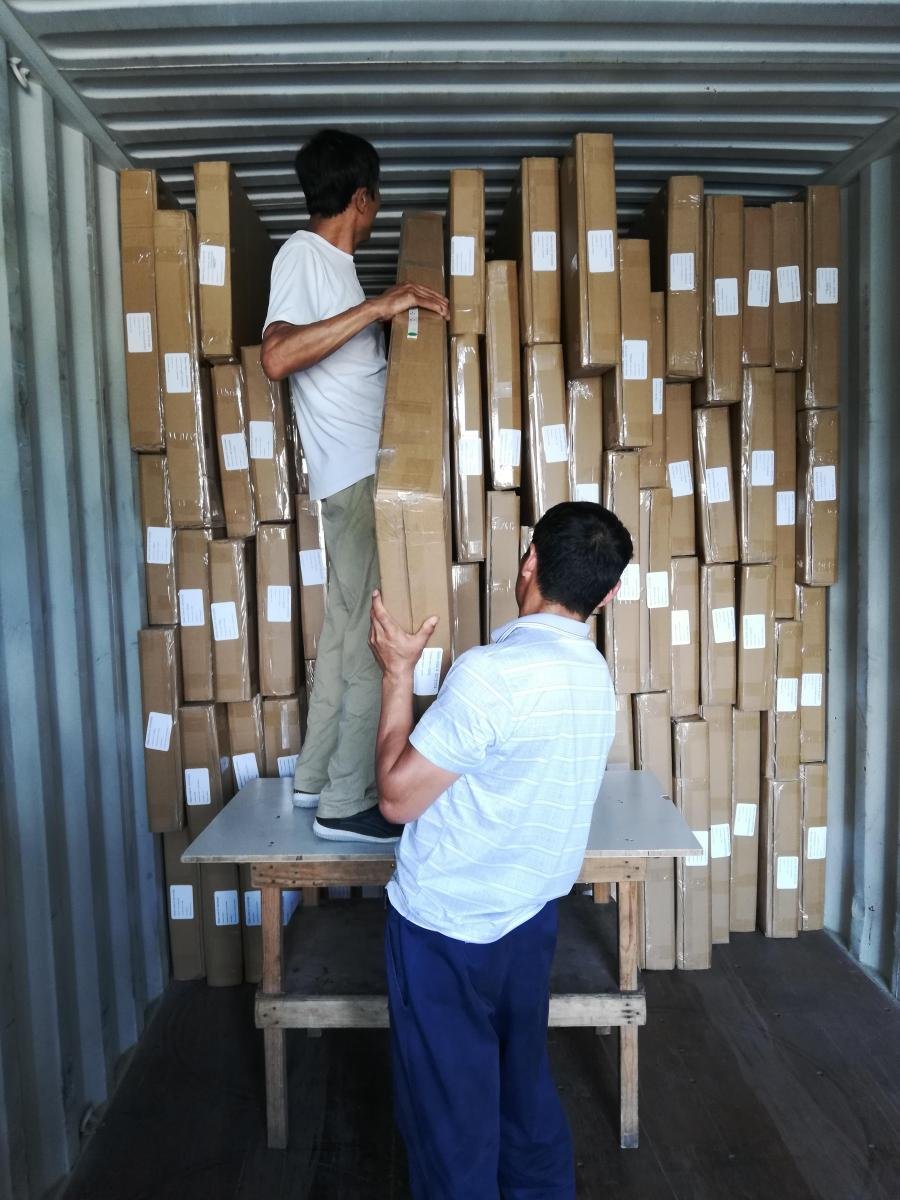
Most window coverings defects reported by international buyers don't originate from the production stage -- they emerge during 25-40 day ocean voyages. Temperature swings inside a steel container, humidity condensation, stacking pressure from overladen cargo and vibration from sea swell all stress products in ways that a static factory inspection cannot replicate.
Our QC protocols are specifically calibrated for this reality. Packaging compression tests simulate the worst-case stacking scenario for a 40-foot high-cube container fully loaded. Moisture content is recorded at point of sealing, not at point of manufacture. UV test results are batch-archived so that warranty discussions are grounded in documented data rather than assumption.