

Aluminum
Plantation Shutters
Built for Coastal & Commercial
Manufactured from 6063-T5 aluminium alloy -- extruded, machined and powder-coated entirely in-house -- Goodwood's aluminum plantation shutters are built for coastal environments, large-span openings and commercial projects where long-term structural integrity is non-negotiable.
6063-T5 Aluminium.
In-House Extruded.
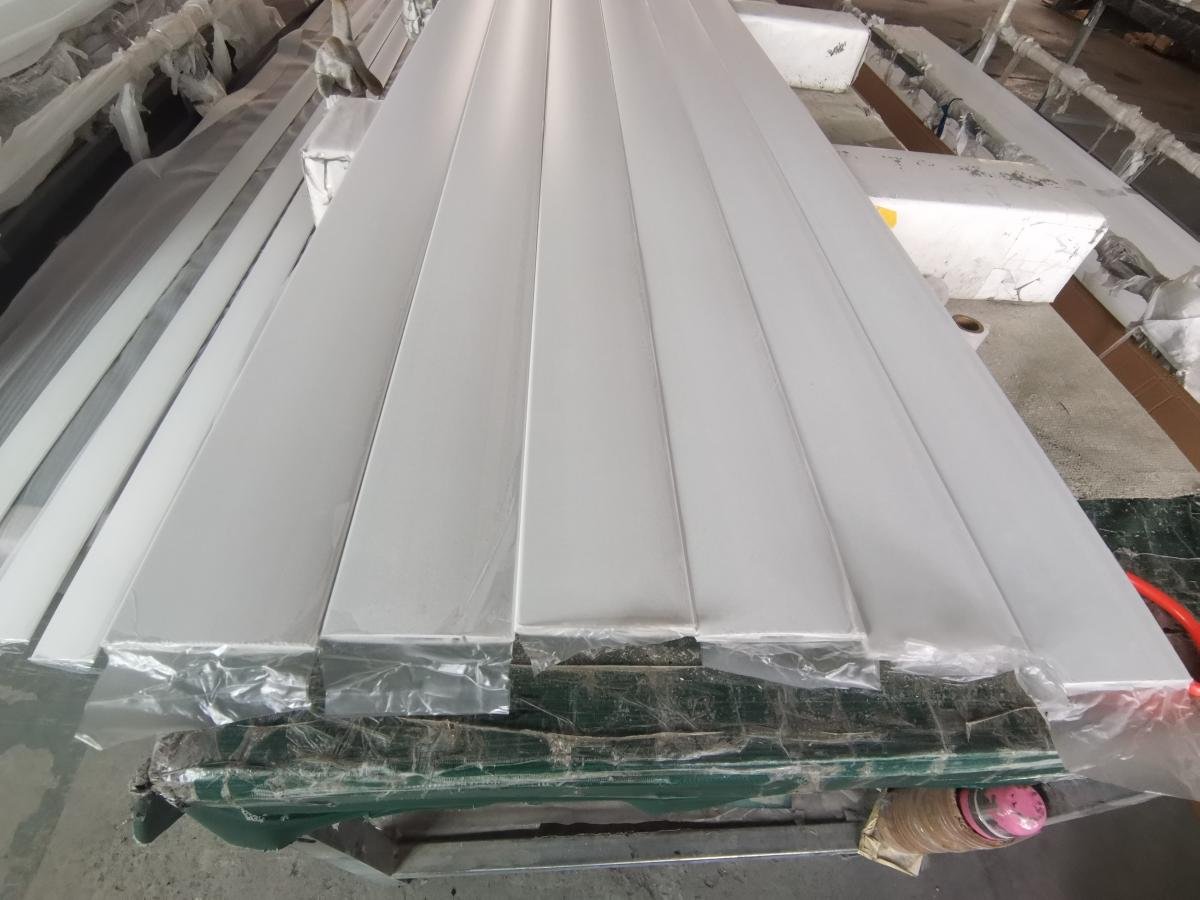
Every aluminium profile used in Goodwood's plantation shutters is extruded on our own production lines using 6063-T5 alloy -- a medium-strength alloy in the T5 artificially aged temper state. The T5 designation means the profiles are cooled directly from the extrusion die and then artificially aged, producing a consistent internal grain structure that contributes to dimensional stability and resistance to bending under load.
Controlling the extrusion process in-house means we set the wall thickness, cross-section geometry and surface tolerance ourselves -- rather than accepting whatever a third-party profile supplier delivers. This is directly relevant to buyers specifying large-span frames or high-louvre-count panels, where profile consistency across a batch matters for fit and finish.
Powder Coating Process: All aluminium frames and louvres are powder-coated on-site using thermosetting polyester powder. The coating is applied electrostatically and cured in a controlled-temperature oven, producing a uniform film thickness across complex profile geometries. Colour matching to RAL and custom swatches is available for qualifying order volumes.
Gear-Rod Louvre
Control Mechanism
Goodwood's aluminum plantation shutters use a gear-rod tilt mechanism rather than a traditional centre tilt rod. A continuous aluminium drive rod runs through the back of the frame and engages a gear assembly at each louvre pivot point -- distributing the tilt force evenly across the full panel width rather than concentrating it at a single cord or rod attachment.
The practical outcome is a cleaner front face with no visible tilt rod interrupting the louvre line, and a more consistent louvre angle across wide panels. For buyers specifying large-span bi-fold or sliding configurations -- common in Australian and New Zealand residential projects -- this mechanism maintains louvre alignment even when individual panels are handled independently.
-
Distributed Tilt ForceGear engagement at each louvre pivot prevents uneven torque loading -- particularly relevant for panels with 10+ louvres or widths exceeding 900mm.
-
Hidden Drive RodThe aluminium drive rod is routed behind the louvre line, keeping the front face unobstructed -- a visual requirement increasingly specified by architects and interior designers.
-
Aluminium-to-Aluminium ContactFrame, louvre and drive rod are all aluminium -- eliminating the thermal expansion mismatch that occurs when plastic components are used in metal-framed shutters exposed to direct sun.
-
Cost-Competitive at ScaleIn-house extrusion of both the frame profiles and the drive rod means the mechanism adds minimal cost per panel compared to sourcing equivalent components externally -- an advantage we pass through to wholesale pricing.
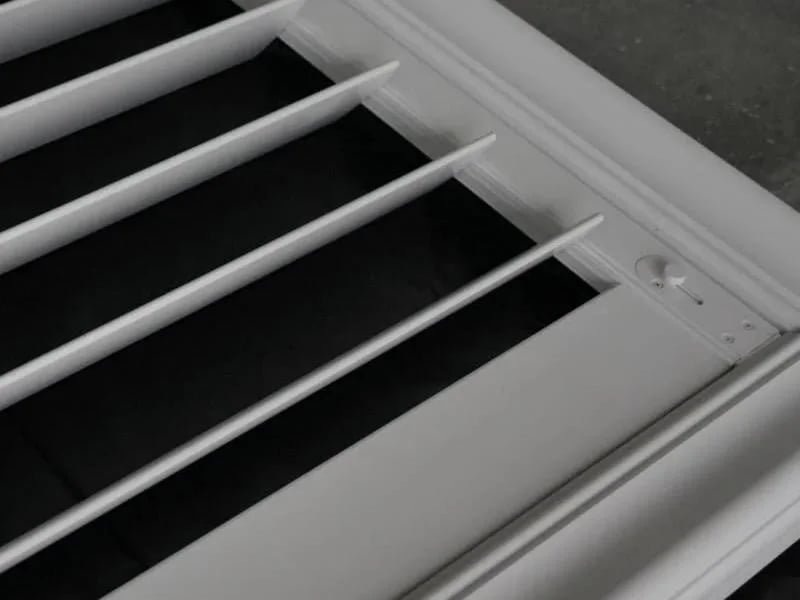
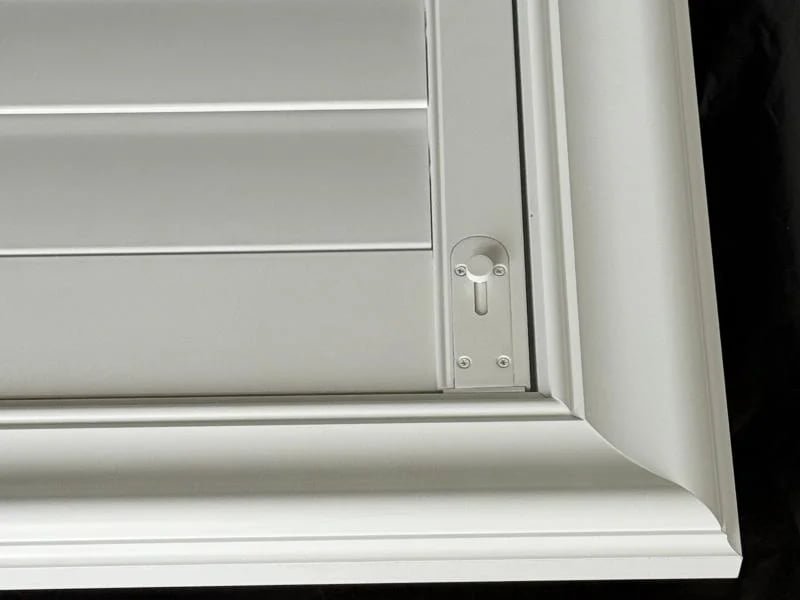
Mechanism Comparison: Gear-Rod vs. Centre Tilt Rod
Coastal Environments.
Extreme Climates.
A significant share of Goodwood's aluminum shutter volume goes to coastal markets in Australia, New Zealand and the US Gulf Coast -- environments where salt air, UV exposure and temperature cycling are the primary durability drivers. Here is how the material and process choices address those conditions.
Powder Coat as Corrosion Barrier
Thermosetting polyester powder coatings applied at controlled film thickness create a continuous barrier between the aluminium substrate and airborne chlorides. The curing process cross-links the polymer chains, reducing porosity compared to liquid paint. This is the primary mechanism by which powder-coated aluminium performs in salt-air environments -- not the aluminium alloy itself, which would oxidise without surface protection.
T5 Temper -- Strength Through Ageing
The T5 temper state is produced by artificial ageing after extrusion -- a controlled precipitation hardening process that increases the yield strength of the 6063 alloy relative to its annealed (O) or solution-treated (T4) states. In structural terms, this means the louvre and frame profiles resist bending under wind load and repeated manual operation better than softer-temper alternatives. We do not quote specific yield figures here because tested values vary by profile geometry -- buyers with engineering requirements should request material certificates.
Thermal Expansion -- Managed by Design
Aluminium expands and contracts with temperature. For shutters installed in direct sun in Queensland or Arizona, daily temperature swings of 30-40°C are normal. Goodwood's aluminium shutter frames include expansion gaps in the hinge and frame joint design, and the all-aluminium construction means every component expands at the same rate -- avoiding the stress concentrations that occur in mixed-material assemblies.
UV Stability of Powder Coat
Thermosetting polyester powders used in exterior-grade applications are formulated with UV stabilisers that slow chalking and colour fade. The degree of UV resistance varies by powder formulation and colour -- darker and saturated colours generally show more visible fade over time than whites and light neutrals. Buyers specifying non-standard colours for coastal or high-UV installations should discuss powder grade selection during the enquiry stage.
High-Humidity Environments
Unlike wood, aluminium does not absorb moisture. There is no warping, swelling or paint delamination caused by humidity cycling. This makes aluminium the preferred specification for bathrooms, pool surrounds, covered outdoor areas and tropical climates -- applications where wood or PVC shutters may perform acceptably but where aluminium eliminates a category of maintenance and warranty risk entirely.
Testing &
Certification
We understand the ASTM, AS/NZS and EN standards relevant to our target markets and design our products with those frameworks in mind. We do not quote specific salt-spray test hours or load ratings in marketing materials -- those figures are geometry and configuration-dependent. Buyers with project specifications requiring documented test data should raise this during the enquiry stage, and we will advise on what is available or testable for their specific configuration.
Where Aluminium
Shutters Are Specified
Aluminium is not the right choice for every project -- but for the scenarios below, it is typically the most defensible specification from a durability and maintenance standpoint.
Beachfront & Waterfront Homes
Salt air is the primary specification driver. Powder-coated aluminium is the standard choice for homes within 1-2km of the ocean in Australian and New Zealand coastal markets, where warranty claims on wood shutters for corrosion-related finish failure are a known industry issue.
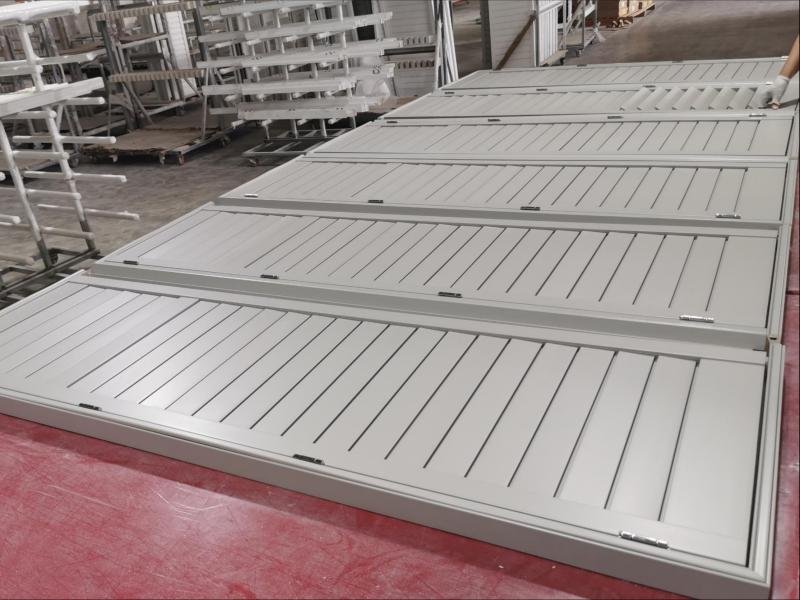
Hotels, Resorts & Commercial Fit-Outs
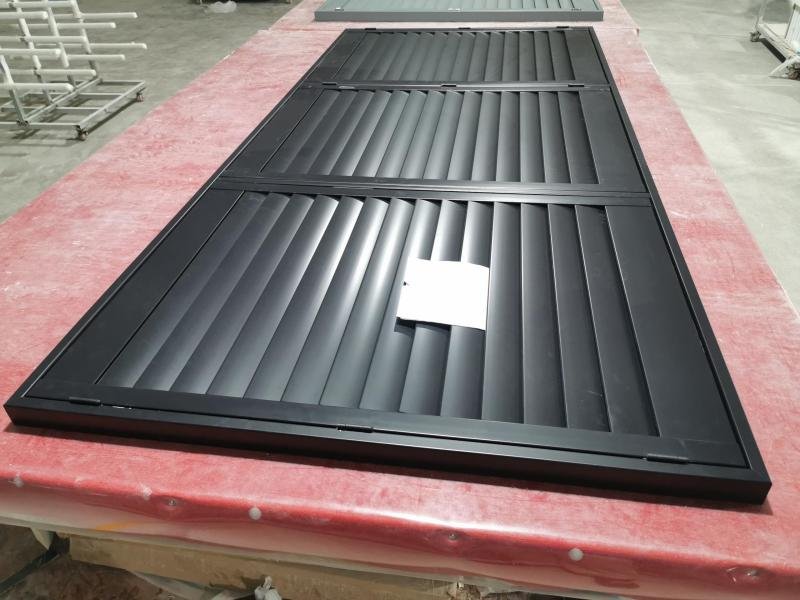
Large-span openings in hotel lobbies, resort villas and commercial buildings benefit from aluminium's structural rigidity at width. Custom RAL colour matching and consistent finish across large-volume orders makes aluminium practical for projects requiring visual uniformity across hundreds of panels.
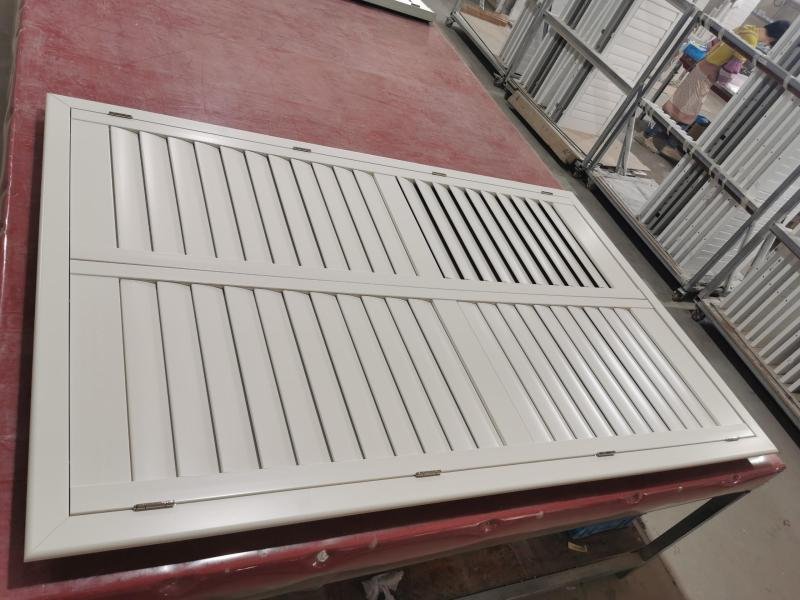
Apartment & Townhouse Developments
Project builders specifying shutters across 50-500+ units benefit from aluminium's dimensional consistency -- profiles extruded from the same die produce identical cross-sections across the full order, reducing on-site fitting issues caused by batch variation.
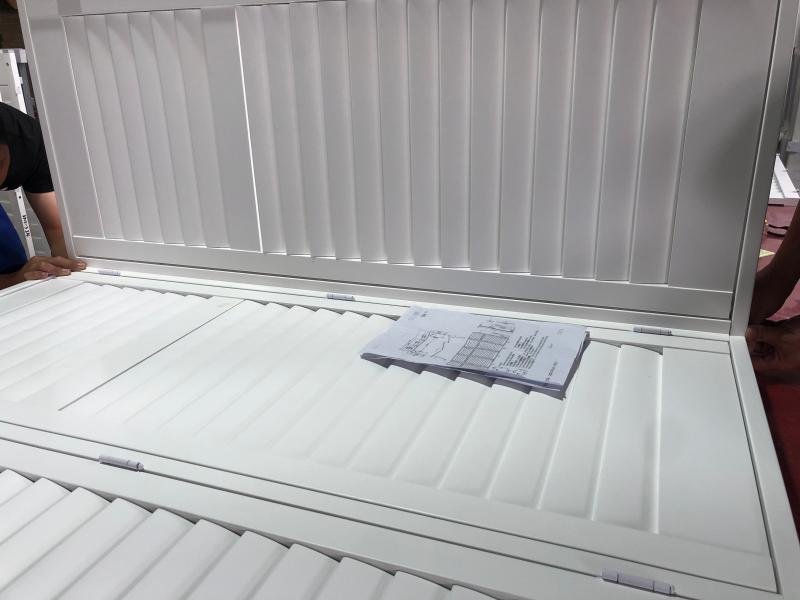
Alfresco, Pool & Covered Outdoor Areas
Semi-exposed outdoor areas where shutters are subject to rain, condensation and direct UV are a natural fit for aluminium. No swelling, no paint peel from moisture ingress, and no warping from seasonal humidity changes -- the maintenance profile is materially lower than wood in these applications.
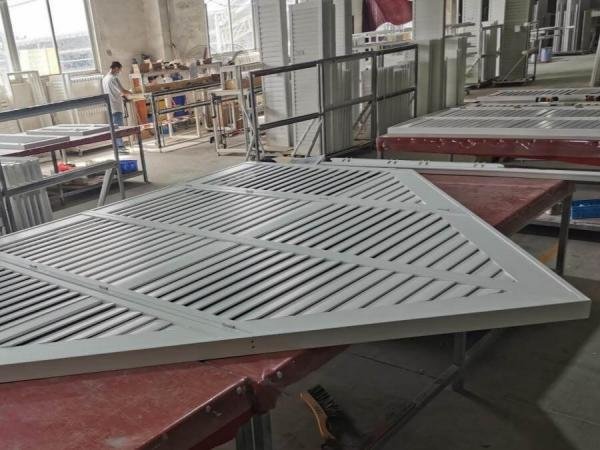
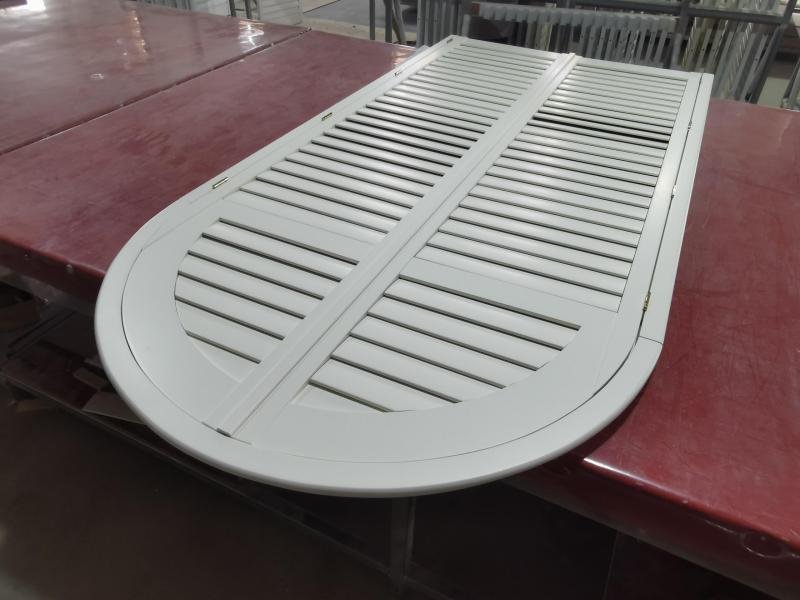
Arch, Circle & Triangle Openings
Aluminium's machinability means shaped frames -- full arch, half arch, circle, triangle -- are produced using the same CNC centres as standard rectangular frames. Shape premiums exist, but because we own the tooling and machining capacity, they are lower than equivalent shapes sourced from third-party fabricators.
Proprietary Profiles for Brand Partners
Wholesale and brand partners looking to differentiate on product design can commission proprietary louvre cross-sections or frame profiles. Because we own the extrusion tooling, a custom die can be produced for qualifying volume commitments -- giving partners a profile geometry that is not available to competitors sourcing from standard-profile suppliers.
Supplying Project Builders & Developers?
If you are sourcing aluminium shutters for a multi-dwelling development, commercial fit-out or builder programme, our project builder solutions page covers volume pricing structure, delivery scheduling and how we handle specification consistency across large orders.
Frequently Asked Questions -- Aluminum Plantation Shutters
Are aluminium shutters suitable for external installation?
Powder-coated aluminium is the most common material used for exterior plantation shutters. The powder coat provides a barrier against moisture and salt air, and aluminium does not rot, warp or corrode in the way wood does. Frame design should include appropriate drainage and weep holes -- confirm this requirement during the enquiry stage for exterior applications.
What is the maximum panel width available?
Maximum panel width is dependent on louvre width, frame profile wall thickness and the number of louvres per panel. As a general guide, 89mm louvre panels can be produced at widths up to approximately 1200mm before structural reinforcement is required. Wider panels are possible with mid-rail additions or heavier-section frames -- discuss your specific span requirements with our team.
Can we specify custom RAL colours?
Yes. Custom RAL colours are available for qualifying order volumes. We recommend requesting a physical powder-coated sample chip before confirming colour specifications on large orders -- screen representations of powder colours are not reliable for colour-critical applications.
Do you offer motorised louvre control for aluminium shutters?
Motorised tilt is available for aluminium shutters as a project-specific option. Integration with smart-home systems (including common protocols used in the Australian and US markets) can be discussed during the specification stage. Motorised options have longer lead times and higher MOQs than manual configurations -- raise this requirement early in the enquiry process.
What is the minimum order quantity?
MOQ varies by configuration and whether the order is a standard or custom specification. Standard configurations can be included in mixed-FCL loads alongside other Goodwood product lines -- reducing the effective MOQ for buyers sourcing multiple product categories. Contact our team with your volume and configuration requirements for a specific MOQ and pricing discussion.
How does aluminium compare to PVC for coastal applications?
Both aluminium and PVC perform well in coastal environments relative to wood. Aluminium is preferred for large-span panels and external applications where structural rigidity matters. PVC is generally lower cost and performs adequately for interior coastal applications. For buyers unsure which material is appropriate for their market, we can supply samples of both for comparison -- contact us to arrange.
Ready to Specify
Aluminum Shutters?
Use the online configurator to work through louvre width, frame profile, colour and shape -- or contact our team directly with your project brief. We respond within one business day with indicative pricing and lead time.