UK Visitor

You're visiting from the UK. New Age Shutters and The Shutter Studio are Goodwood's Official UK Partners -- offering local quotes, samples and delivery across the United Kingdom.

Manufacturing Quality Control System

Six-Stage Quality
Control System

Every order passes through six mandatory quality gates -- from incoming raw material inspection through to packed carton compression testing. No stage is optional, no batch is exempt.

6
Mandatory
QC Stages
100%
FQC Full
Inspection
Pre-Shipment
Check Points
3P
Third-Party
Inspection Ready

End-to-End Process

Six Quality Gates.
Zero Optional Steps.

Quality at Goodwood is not a department -- it is a sequence of mandatory checkpoints built into the production flow. Each gate must be cleared before the order progresses to the next stage.

Goodwood Shutters six-stage quality control process flow diagram
  1. IQC -- Incoming Quality Control

    Raw Materials

    Every incoming material lot -- PVC compound, timber billets, aluminium extrusions, hardware components, fabric rolls -- is inspected against a fixed acceptance specification before entering the warehouse. Rejected lots are quarantined and returned to the supplier. Production does not begin on a batch until IQC clearance is recorded.

  2. IPQC -- In-Process Quality Control

    During Production

    QC inspectors conduct roving checks at every production workstation -- extrusion, CNC machining, assembly and coating. Dimensional tolerances, louvre operation, coating adhesion and surface finish are verified at defined intervals throughout the run. Issues detected at this stage are corrected before they compound into a larger defect pool downstream.

  3. FQC -- Final Quality Control

    Finished Goods

    Every finished unit -- not a sample -- is inspected before it reaches the packing station. FQC covers overall dimensional accuracy, colour consistency against the approved production standard, louvre or slat operation, hardware function, surface defects and labelling correctness. Units that fail FQC are reworked or scrapped; they do not enter the shipping carton.

  4. UV Anti-Yellowing Test

    Coating Durability

    Coating batches are subjected to accelerated UV exposure testing to verify anti-yellowing performance. This test runs on every production batch, not on periodic samples. It is particularly relevant for white and off-white finishes destined for high-sunlight markets such as Australia and the US Southwest. Results are logged against the batch record.

  5. Moisture Resistance & Structural Stability Test

    Material Integrity

    Timber components are kiln-dried to a controlled moisture content before machining, and finished wood shutters undergo humidity cycling tests to verify dimensional stability. This step directly addresses the warping and delamination risk that is the most common cause of warranty claims in wood shutter products. PVC and aluminium components are tested for structural rigidity and joint integrity under load.

    Honest limitation: Even after passing these tests, solid-wood shutters are not recommended for rooms with sustained ambient humidity above approximately 70% (e.g. steam-heavy bathrooms). PVC or aluminium are the appropriate material choice in those environments.
  6. Packaging Compression & Drop Test

    Export Packaging

    Packed cartons are tested for compression resistance and drop performance to simulate ocean freight stacking loads and handling impacts. Packaging specifications are validated per product family and updated whenever a new carton supplier or configuration is introduced. Carton markings, packing lists and shipping labels are verified against order documentation before the carton is sealed.

Pre-Shipment

Two Checks Before
Your Cargo Loads.

Most factories inspect finished goods once -- when they come off the assembly line. Goodwood runs a second, independent check after goods are packed into export cartons and again when the container is being loaded. This two-point pre-shipment process is the step that most directly determines whether the quality you approved in samples is the quality that arrives at your warehouse.

Check Point 1 -- Packed Carton Audit

After FQC-passed units are packed, a random carton audit verifies that the correct products, quantities, colour codes and hardware accessories match the packing list. Carton weight and dimensions are confirmed against the shipping document.

Check Point 2 -- Container Loading Supervision

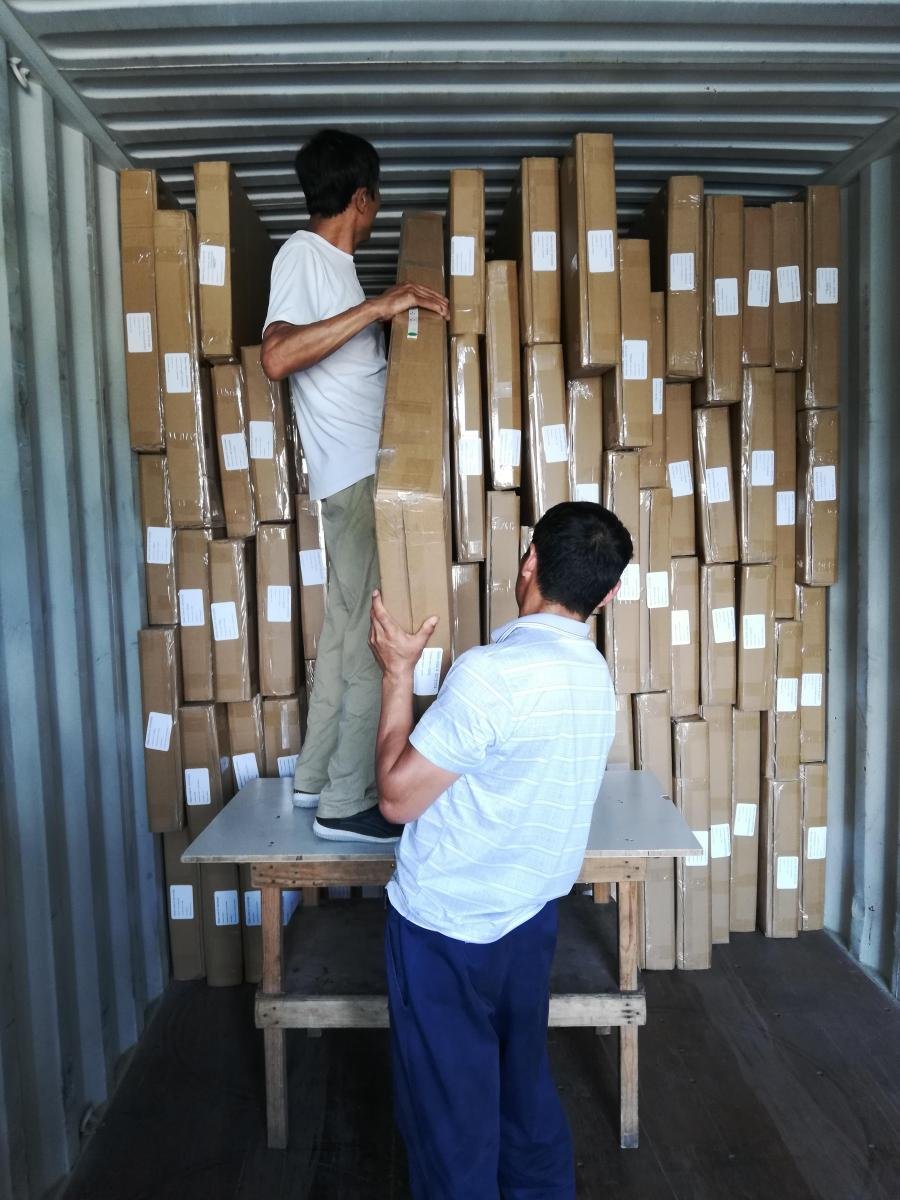
A QC supervisor is present during container stuffing to verify stacking orientation, void filling and load securing. Container number and seal number are recorded and provided to the buyer in the shipping documents. This step catches any last-minute substitution or packing error before the container is sealed.

Third-party inspection: Buyers may nominate an independent inspection agency (SGS, Bureau Veritas, or equivalent) to attend either checkpoint. We provide full access to production records and finished goods. Please notify us at least 5 working days in advance so we can align the inspection date with the production schedule.

100%
Units individually
inspected
Independent
check points
5d
3rd-party notice
required
See our factory structure & production flow
QC supervisor conducting packed carton audit at Goodwood factory
QC team verifying product colour codes and accessories against packing list
Export cartons stacked and labelled with product codes ready for audit
Container loading supervisor recording seal number on shipping documents
Plantation shutters packed in protective foam inserts inside export carton

What We Actually Check

Stage-by-Stage
Inspection Detail

Each QC stage targets specific failure modes. The cards below describe what is checked, why it matters to buyers, and how problems at each stage are handled.

Stage 01

IQC -- What We Check

  • Timber moisture content and grain quality
  • PVC compound colour consistency and melt index
  • Aluminium extrusion wall thickness and alloy certificate
  • Hardware (hinges, tilt rods, lift cords) dimensional and functional check
  • Fabric roll colour, weight and weave integrity

Why it matters: Defective raw material that enters production creates defects that are expensive to detect and impossible to fully eliminate downstream.

Stage 02

IPQC -- What We Check

  • Extrusion wall thickness and profile straightness at regular intervals
  • CNC cut dimensions and mortise/tenon fit tolerance
  • Coating wet film thickness and surface adhesion (cross-cut test)
  • Assembly alignment and panel squareness
  • Louvre rotation torque and tilt rod alignment

Why it matters: Catching dimensional drift at the machining stage prevents an entire batch from failing FQC -- which would require rework or scrapping of finished product.

Stage 03

FQC -- What We Check

  • Overall width, height and depth against order specification
  • Colour match against approved production colour standard
  • Surface defects: scratches, dents, paint drips, contamination
  • Full hardware function: hinges, tilt rods, lift cords, motorised mechanisms
  • Label, barcode and product code accuracy

Why it matters: FQC is the last gate before packing. No unit enters a shipping carton without passing this check.

Stage 04

UV Testing -- What We Check

  • Accelerated UV exposure on coating batch samples
  • Colour shift measurement before and after UV exposure
  • Coating adhesion check post-exposure (cross-cut or tape pull)
  • Chalking and surface degradation visual assessment

Why it matters: Yellowing white shutters are the single most common aesthetic complaint in high-sunlight markets. Batch-level testing catches coating formula drift before it ships.

Stage 05

Moisture & Structural -- What We Check

  • Timber moisture content at intake and post-kiln-drying
  • Humidity cycling: dimensional measurement before and after controlled humidity exposure
  • Frame and panel joint integrity under lateral load
  • PVC rigidity under sustained load at ambient temperature

Why it matters: Warping and joint separation are the primary structural failure modes in wood shutters. Controlling moisture content at every stage is the most effective prevention.

Stage 06

Packaging Test -- What We Check

  • Carton compression resistance (edge and flat stacking load)
  • Drop test from handling height -- corner, edge and face impacts
  • Internal cushioning adequacy -- product movement within carton
  • Packing list accuracy and label/barcode scan verification

Why it matters: Transit damage that occurs after a product passes FQC is still a buyer problem. Packaging specification validation is the last line of defence.

Stage When Coverage Applies To
IQC Before production starts 100% of incoming lots All product lines
IPQC During production run Roving, defined frequency All product lines
FQC Post-assembly, pre-packing 100% of finished units All product lines
UV Test Per coating batch Every batch (not sampled) Shutters, Blinds
Moisture / Structural Pre-machining + batch cycle Per timber batch Wood Shutters, Blinds
Packaging Test Per carton spec change Per product family All product lines

Buyer Questions

Common Quality
Questions

These are the quality-related questions we receive most often from buyers during supplier evaluation. Straightforward answers -- no hedging.

Full FAQ centre

We support third-party pre-shipment inspection by agencies such as SGS, Bureau Veritas or your own nominated inspector at any stage. Our QC team works alongside third-party inspectors and provides full access to production records, test logs and finished goods. Arranging a third-party inspection does not extend lead times provided we receive advance notice.

We ask buyers to document defects with photographs and a written description within 30 days of arrival. Our QC team reviews the evidence, traces the production batch records, and determines root cause. Remedies depend on the nature and scale of the defect and are agreed in writing. We do not require goods to be returned to China before initiating a resolution -- photographic evidence is sufficient for most cases.

Yes. We can share our standard FQC checklist, coating adhesion test procedures and UV anti-yellowing test methodology on request. We do not fabricate test report numbers or certifications -- if a specific third-party lab report is required for your market, we will advise whether it has already been conducted or quote the cost and timeline to commission it.

Have Quality Requirements
to Discuss?

Share your product category, target market and any specific QC or compliance requirements. We will respond within one business day with a clear picture of how our process aligns -- including any gaps we are aware of.

info@goodwoodshutters.com +86 151 6071 6597