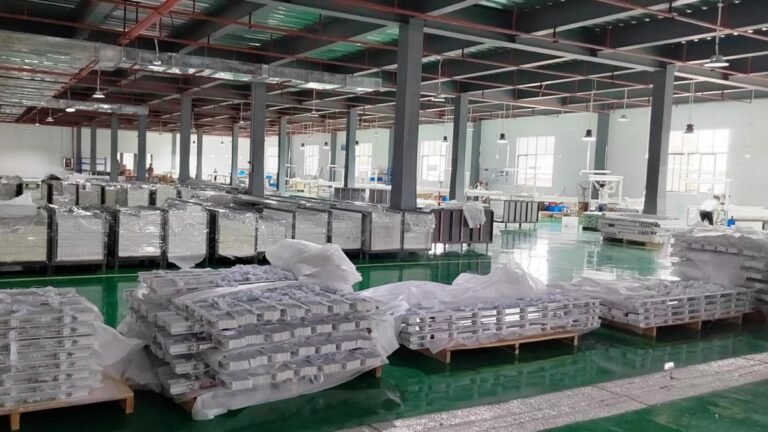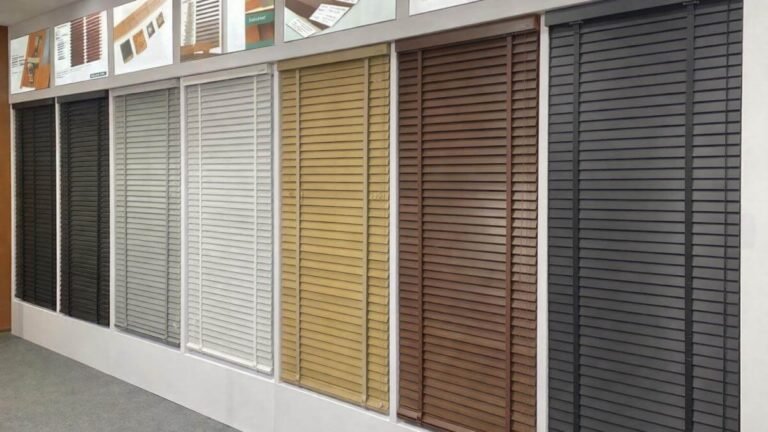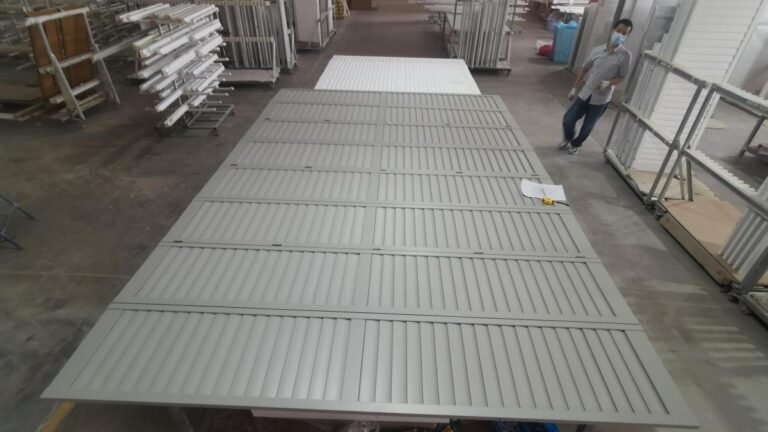

Child safety is no longer a question that window shutter suppliers and window covering distributors can answer with a single “cordless” label. Founded in 2008, Goodwood Shutters operates a manufacturing footprint of more than 50,000 m² in Xiamen, China. Manufacturing scale is not proof of product-specific regulatory compliance.
For wholesalers, private-label brands and project buyers, the real decision is more precise: which product is being supplied, how does it operate, where will it be sold and installed, and what evidence supports the claimed level of safety? The United States, European Union and Australia approach these questions differently. A useful sourcing process begins with those differences, not with a generic certificate request. The discussion is an industry sourcing overview, not a legal determination for any SKU.
1. What Makes Window Covering Cords Hazardous, and Are Cordless or Motorized Systems Always Safer?
Accessible operating cords and internal cords can create strangulation hazards when they form loops or allow dangerous entanglement. Cordless and motorized systems can remove a familiar pull cord, but their safety still depends on the complete design. Buyers must assess accessible cords, internal mechanisms, installation and the rules governing the particular product.
An operating cord is the part a user pulls to raise, lower or adjust a covering. An inner cord may run through slats or inside the assembly to support lifting. Bead chains and continuous loops create additional design questions because a hanging loop can remain accessible even when the product looks tidy in a showroom. The presence of a cleat or tensioner does not automatically make every arrangement acceptable in every market.
The terms are also easy to misunderstand. “Cordless” generally describes the absence of an external operating cord; it does not promise that no cord exists anywhere inside the product. A motorized roller shade may use a motor rather than a hand-operated chain, but the complete assembly still needs an appropriate hazard assessment. Conversely, a plantation shutter with manually tilted louvers may have no lift-cord mechanism of the kind found in a Venetian blind. Applying a blind-specific rule to every shutter without examining its construction is poor compliance practice.
For purchasing teams, the first document should be a drawing or technical description of the operating system, not just a lifestyle photograph. Ask the supplier to identify any exposed cord, accessible chain, inner cord, loop-forming point, safety device and installation-dependent feature. Assess each intended size and variation where the mechanism changes. The appropriate answer is a system-level assessment: the absence of a visible pull cord is a design advantage, not proof of regulatory compliance.
For mixed shipments, review wooden shutters, PVC blinds and fabric shades separately; evidence for one mechanism cannot automatically cover another.
2. What Do US Child-Safety Rules Require for Stock and Custom Window Coverings?
In the United States, the critical first distinction is stock versus custom window coverings. Under the current CPSC substantial-product-hazard framework, specified operating-cord restrictions apply to stock products, while inner-cord and identification-label requirements can apply to both stock and custom products. Voluntary standards and proposed amendments must not be presented as identical to current federal requirements.
The U.S. Consumer Product Safety Commission (CPSC) addresses window covering cord hazards through several legal and standard-setting mechanisms. A particularly important one is 16 CFR Part 1120, explained by CPSC business guidance1, which identifies specified nonconforming window coverings as substantial product hazards. Its operative references include applicable portions of ANSI/WCMA A100.1-2018. The industry also has an ANSI/WCMA A100.1-2022 edition; the existence of a newer voluntary edition does not, by itself, mean every provision has replaced the version cited in the current federal rule.
“Stock” is a regulatory classification based substantially on when the covering was fabricated in relation to a specific consumer request. A made-to-fit adjustment or seller cut-down does not necessarily transform a substantially pre-fabricated stock covering into a custom one. Custom coverings are defined by not meeting the stock definition. Buyers should therefore ask the supplier and U.S. importer to document the classification rather than relying on labels such as “bespoke,” “wholesale” or “made to size.”
For stock window coverings under the current Part 1120 framework, the applicable operating-cord options include a cordless system, an inaccessible operating cord or a short static/access cord no longer than 8 inches (approximately 203 mm). For stock and custom coverings, applicable inner-cord requirements address whether cords are inaccessible or too short to create a hazardous loop. Permanent product identification marking is also part of the rule: details include the relevant manufacturer, importer or fabricator identification, production date and stock/custom designation, as applicable.
Custom operating cords require a more careful legal explanation. The separate CPSC custom-window-covering operating-cord rule adopted in 2022 was vacated by a federal appeals court on September 12, 2023, as recorded in the CPSC FY2023 Annual Report2. That decision did not erase the remaining substantial-product-hazard framework. It is therefore wrong both to claim that every custom operating cord is banned by that vacated rule and to imply that custom products have no relevant safety obligations.
There is also an active rulemaking issue. On September 24, 2026, CPSC published a proposed amendment to Part 11203 addressing additional custom cord configurations and other hazards while proposing greater use of ANSI/WCMA A100.1-2022. Comments are due November 23, 2026. As of November 11, 2026, this is a proposal, not an effective final amendment. Procurement contracts for later delivery should require a fresh check of the rule’s status before product and artwork sign-off.
A U.S. purchase specification should identify stock/custom classification, cord design, test methods, marking and evidence for the exact model. If a report covers another mechanism or standard edition, request an explanation; “meets American standards” is not a sufficient product-level answer.
3. How Does the EU Regulate Child Safety for Internal Blinds and Corded Window Coverings?
EU buyers should evaluate internal blinds and corded coverings under the General Product Safety Regulation and the applicable European standards addressing strangulation risks. EN 13120, EN 16433 and EN 16434 provide important technical references. However, following a standard, holding a certificate and meeting legal obligations are different claims; the applicable rules depend on the specific product.
The EU General Product Safety Regulation, Regulation (EU) 2023/9884 (GPSR), has applied since December 13, 2024. It places a general safety framework around consumer products within its scope, alongside any relevant product-specific legislation. Buyers need to consider hazards in normal and reasonably foreseeable use, including risks to children, and the responsibilities of economic operators placing the product on the EU market.
For internal blinds, three technical references are particularly relevant. EN 13120 addresses performance requirements including safety. EN 16433 sets out test methods concerning strangulation hazards, while EN 16434 addresses requirements and tests for safety devices. These references are not interchangeable: a design claim, a test method and a safety-device evaluation answer different questions. A product with a chain-retaining device still needs the correct evaluation of accessibility, effectiveness and installation assumptions.
The history of these references matters because outdated articles often cite obsolete implementing decisions. The European Commission’s older 2014/531/EU reference should not be treated as the current standards-publication decision. More recently, Commission Implementing Decision (EU) 2026/9015, published on April 27, 2026, listed EN 13120:2009+A1:2014, EN 16433:2014 and EN 16434:2014 within the updated standards-publication framework supporting GPSR. Publication of a reference can support a presumption of conformity for the specific risks covered; it does not exempt the economic operator from assessing the rest of the product or documenting the applicable obligations.
For private-label brands, “tested against EN 13120” needs evidence identifying the exact model and clauses. “EN 13120 certified” may wrongly imply a certification status. Request report scope, model mapping and limitations.
The same caution applies to CE marking. Not every manually operated interior blind is automatically subject to CE marking merely because EN 13120 exists. The European Commission guidance on CE marking6 explains why the applicable legislation must be identified first. A motorized product may trigger other applicable EU harmonisation legislation depending on its electrical and mechanical characteristics. The manufacturer and EU importer need to determine the applicable legal framework for that actual configuration before selecting markings or issuing declarations.
For EU orders, ask who is responsible for the technical file, risk assessment, traceability information, warnings, instructions and any relevant economic-operator obligations. Confirm which languages and safety information the destination markets require. Seek documentation linked to the ordered model rather than generic certificates.
4. What Must Suppliers and Installers Check Under Australia's Corded Window Covering Safety Rules?
Australia has separate mandatory requirements for the supply of corded internal window coverings and for their installation. Suppliers must address relevant warnings, labels and instructions; installers must secure cords and follow installation safeguards. Compliance at the factory gate does not remove installation obligations, and a correctly installed product still needs compliant supply information.
Australian buyers should start with two instruments identified by the Australian Competition and Consumer Commission (ACCC)7: the Trade Practices (Consumer Product Safety Standard — Corded Internal Window Coverings) Regulations 2010 and the Competition and Consumer (Corded Internal Window Coverings) Safety Standard 2014. These cover different stages of the product’s journey. They should not be replaced in a purchase specification by an unqualified reference to “AS 4029 compliance.”
At the supply stage, corded internal window coverings need prescribed warning information, including retail-packaging warnings and warnings or swing tags attached to cords, together with installation instructions. The exact required wording and presentation need to be checked against the mandatory standard. That is particularly relevant to private-label buyers who redesign cartons, remove original tags or translate supplier packaging into their own branding. Attractive packaging cannot take priority over required safety information.
At the installation stage, the 2014 standard addresses accessible loose cords, cleats and cord guides. In the circumstances covered by the rule, installation must prevent a loose cord from forming a loop 220 mm or longer below 1,600 mm above floor level. A cleat used to secure a cord cannot be installed lower than 1,600 mm. A cord guide may be fitted below that height only where the applicable securing and tension conditions are met, including the specified 70 N attachment-force condition. These are conditional installation requirements, not universal performance claims about every component of every blind.
Installers also have responsibilities relating to installation instructions and identification information. The ACCC guidance explains that the installer must attach a label showing the installer’s name and contact details and must not remove warnings supplied with the product. For an importer selling to a retail or project network, the installation partner therefore becomes part of the risk-control process.
For Australia-bound orders, confirm approved label artwork, installation instructions, cord-safety components and the responsible installer. Rebranding or local assembly does not eliminate these duties.
Comparison: what trade buyers should verify across three markets
| Decision point | United States | European Union | Australia |
|---|---|---|---|
| Main regulatory starting point | CPSC substantial-product-hazard provisions, including 16 CFR Part 1120 | GPSR and applicable product-specific legislation | Separate mandatory supply and installation standards |
| Critical classification | Stock vs custom; operating cords vs inner cords | Product scope, hazard, relevant standards and economic operator | Corded product supply vs installation service |
| Important technical references | Applicable ANSI/WCMA A100.1 provisions | EN 13120, EN 16433, EN 16434 | 2010 supply rules and 2014 installation rules |
| Typical evidence request | Product classification, cord tests and marking | Risk assessment, model-linked test evidence and instructions | Warning artwork, instructions and cord-safety installation details |
| Unsafe shortcut | “All custom blinds must be cordless under the vacated rule” | “An EN number means a CE certificate” | “A product certificate covers the installer’s obligations” |
This comparison does not replace a market-specific legal assessment. Importers and installers should validate the rules applicable to each model.
5. How Should Trade Buyers Choose Between Corded, Cordless, and Motorized Window Coverings?
Choose an operating system only after identifying the destination market, covering type, user environment and applicable safety requirements. Cordless systems can eliminate external pull cords; motorization can improve convenience and remove a manual operating chain; corded designs may carry additional restrictions and installation duties. None of these labels alone establishes compliance, durability or suitability.
A wholesaler needs each SKU to suit its retail market; a developer also needs maintainability and installation instructions. A new chain, headrail or motor may require fresh evidence even if the product looks unchanged.
| Operating approach | Potential advantage | What to verify before buying | Honest limitation |
|---|---|---|---|
| Corded | Familiar manual control; may suit particular mechanisms where lawful | Market-specific legality, cord accessibility, loop controls, warnings and installation | A low initial cost does not offset noncompliance or hazardous access |
| Cordless | No external pull cord for normal operation | Inner-cord hazards, lift mechanism, durability evidence, size and load limits | Spring or balancing mechanisms may require adjustment or replacement over time |
| Motorized | Remote or switch operation without a manual lift cord in suitable designs | Full cord path, electrical/mechanical requirements, motor and controls, installation | Higher system complexity; motorization does not automatically make every hazard disappear |
This is where a specific limitation deserves to be stated plainly. A cordless Venetian blind is not maintenance-free simply because its lifting cord is hidden. Spring tension, balance and wear can affect long-term operation. A model-specific cycle-life claim needs a test method, loading conditions and traceable results; buyers should not assume one universal spring lifespan. Buyers should instead ask for the declared service conditions, cycle-test basis, repairability and warranty terms for the exact mechanism.
Nor should a project buyer choose corded controls merely because a manual mechanism appears cheaper to service. Child-safety law and foreseeable access to children take priority over a hypothetical maintenance saving. A hotel, rental property or office is not automatically exempt from every applicable safety obligation; its use, users and local legal framework must be assessed.
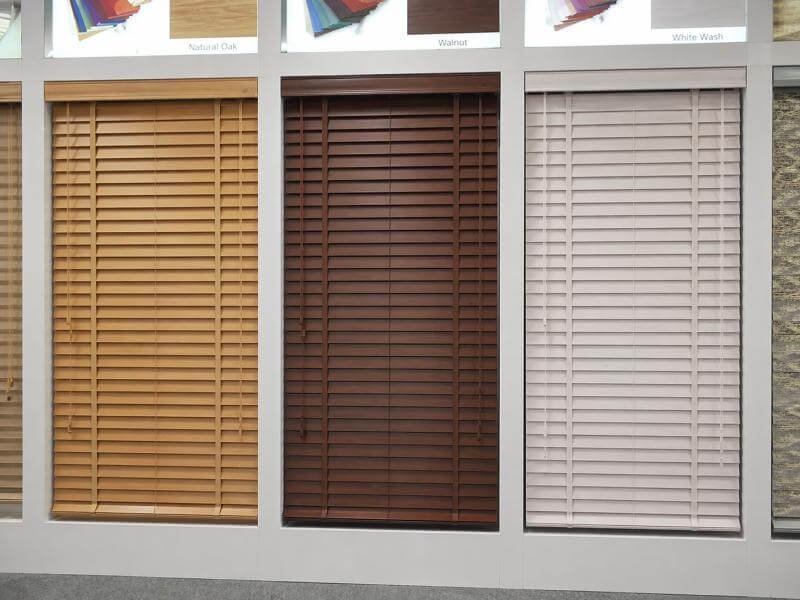
In our published catalog, we list wood and PVC Venetian blinds in 25 mm and 50 mm sizes, plus plantation shutters in wood, PVC and aluminum. The window shades range covers roller, zebra, cellular and Shangri-La shades, together with flyscreens. The published company materials describe motorized integration as a possible window-shade configuration; the available motor models and target-market applicability still require order-specific confirmation. They do not, however, establish a motor compatibility list or certify that every available configuration is compliant for the United States, EU and Australia. Product availability and safety evidence must therefore be confirmed separately for the intended SKU.
A useful selection rule is simple: choose the compliant design first, then compare convenience, repairability and landed cost among the designs that remain. That sequence avoids the expensive mistake of choosing a low-price operating system and discovering a safety or documentation problem after production.
6. What Compliance Evidence Should Buyers Request From Window Shutter Suppliers Before Ordering?
Ask window shutter suppliers for a market-specific, SKU-specific evidence package before approving production. It should identify the operating mechanism, relevant standards or legal provisions, product drawings, applicable test evidence, labels and installation instructions. Confirm which documents are available, which require further work and which party is responsible for market placement and installation.
Define the model, material, dimensions, operating hardware, destination and application first. A shutter without lift cords differs from a corded Venetian blind; a motorized shade may introduce additional electrical obligations.
Next, ask for a mapped evidence set rather than a stack of undifferentiated PDF certificates. The review should answer five commercial questions: Which rule or standard is relevant? Which precise configuration was assessed? What method and version were used? What warning or installation conditions apply? Who will retain the records and respond if a component changes or a market authority asks for evidence?
Manufacturing controls contribute to this process but have a limited role. Goodwood’s published quality-control overview describes incoming quality control (IQC), in-process inspection (IPQC) and final quality control (FQC), alongside broader material and packaging checks. Such controls are valuable for repeatability, yet a documented factory QC system is not a substitute for a valid product-specific child-safety assessment or a legally required declaration. An inspection can catch a missing component only if the correct requirement has first been defined.
Treat design changes like new approval decisions. A revised headrail, chain, tensioner or motor can invalidate prior test assumptions or labels. Keep the approved drawings with the order, and review affected test evidence, instructions and package artwork before accepting substitutions.
Request compliance documentation for your target market
If you are a wholesale distributor or private-label brand sourcing window coverings for the US, EU or Australia, identify your destination country, product category, operating system, planned order volume and buyer documentation requirements.
Request compliance documentation for your target market.
Ask which records can be reviewed for that specific configuration and which additional assessments, tests or documents still need to be arranged. This is a request to clarify evidence availability, not a claim that a particular Goodwood SKU has passed a child-safety standard.
Conclusion: Verify the Product, Not Just the Operating Label
The safest sourcing decision is also the most defensible one: start with the actual mechanism and destination market, verify the applicable rules, then review traceable documentation for the specific product. Cordless and motorized controls can reduce some common cord hazards, but neither label is a substitute for product assessment. For importers, brands and project buyers, a supplier’s willingness to clarify gaps is more useful than an unsupported promise that its entire range is “certified.”
Frequently Asked Questions
Are cordless window coverings mandatory in every country?
No. The US, EU and Australia do not apply one identical cordless mandate to every window covering. Applicable obligations depend on the market, product classification, cord design and installation context. A trade buyer should identify the exact SKU and current local rules before deciding which operating configurations can be sold.
Can custom window blinds with cords still be sold in the United States?
The federal custom operating-cord rule vacated in 2023 does not itself ban every corded custom blind. However, the remaining CPSC substantial-product-hazard provisions, including applicable inner-cord and permanent-label requirements, continue to matter. Check the latest rulemaking and any other laws or standards relevant to the product.
Does EN 13120 compliance mean a blind can carry CE marking?
Not automatically. EN 13120 is a technical reference relating to internal blinds; CE marking is governed by the legislation applicable to the product itself. The importer and manufacturer should determine which requirements apply to a manual or motorized configuration and should not use a generic certificate as proof of authorization.
What should a wholesaler request as child-safety evidence?
Ask for the product drawing, operating-system details, applicable test reports and tested-model coverage, labeling artwork, warnings and installation instructions. Confirm the standards editions, dates, restrictions and responsibilities. If documents are unavailable, establish which new assessments are required before production or market placement.
Review CPSC's current guidance on stock and custom window covering hazards and marking obligations. ↩
Read the federal agency's account of the 2023 court decision concerning custom operating cords. ↩
Check the proposed 2026 amendment and comment period before treating it as final law. ↩
Review the EU consumer product safety framework and the obligations of market operators. ↩
Verify the currently published European standard references and the risks they cover. ↩
Confirm when CE marking is required under legislation for a specific product. ↩
Check Australia's separate product supply and installation safety requirements. ↩