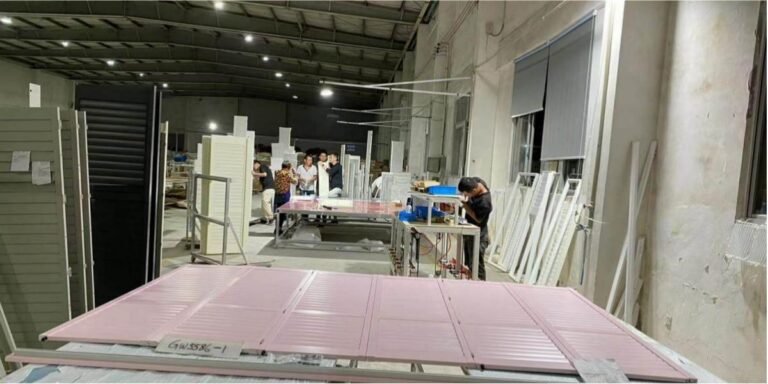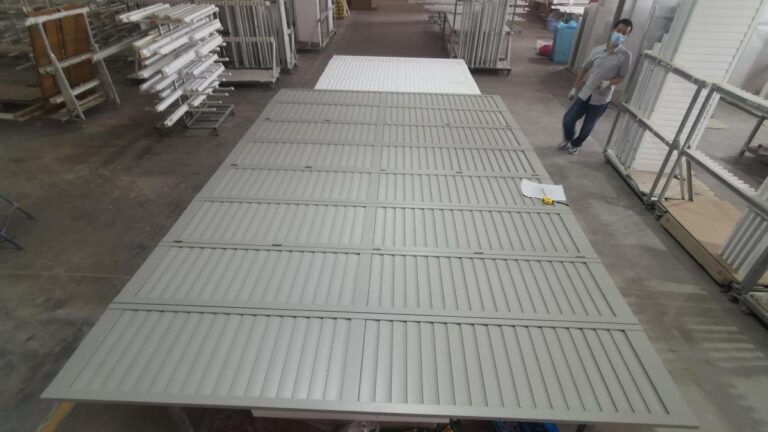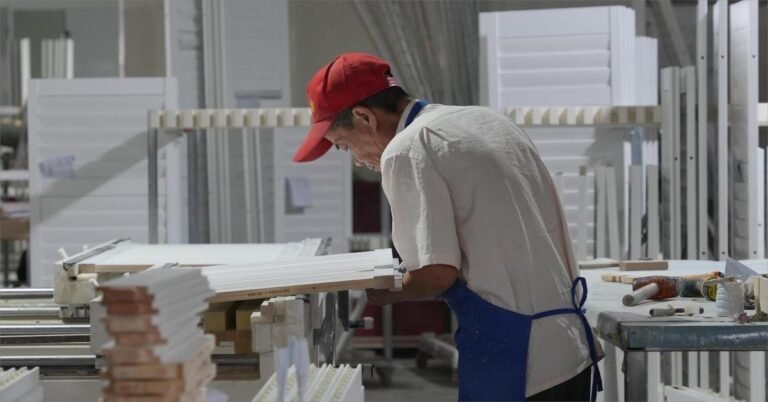

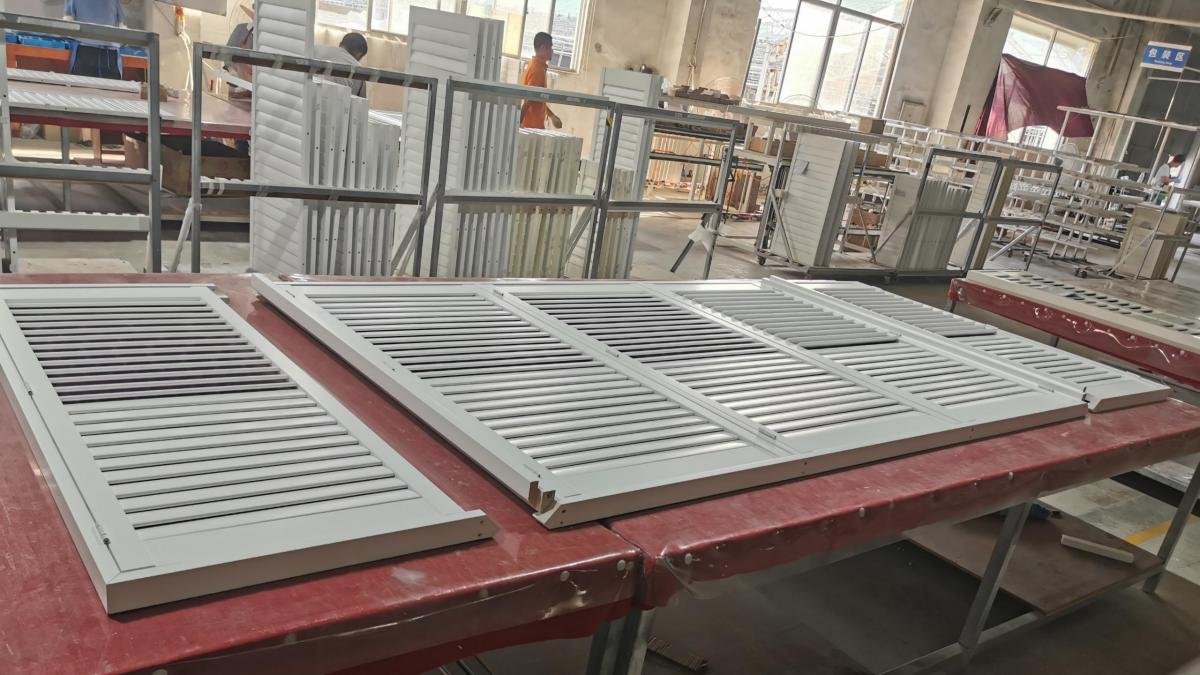
Operating from a 50,000+ m² production base in Xiamen since 2008, we've spent close to two decades learning that the most damaging defects in wood shutter manufacturing are rarely the ones you can see at the factory gate. Case hardening is one of them — a moisture-related defect that passes every routine inspection at shipment, only to surface as visible warping after the container has crossed an ocean. If you're sourcing wooden plantation shutters from China, understanding this defect — and how it's actually tested for — is one of the more useful things you can ask a supplier about before placing an order.
What exactly is case hardening in wooden shutters — and why does it only show up after shipping?
Case hardening happens when the outer layer of a wood component dries and locks in its dimensions while the core still holds a higher moisture content underneath. The board looks and measures fine at the point of production — but the moisture imbalance inside hasn't resolved.
This is our internal standard for kiln drying: a drying cycle of no less than 18 days, with the temperature ramp staged in phases rather than pushed quickly, specifically to avoid locking in this kind of surface-core imbalance. Rushed drying schedules are one of the most common ways case hardening gets baked into a batch of lumber before it ever reaches the shutter production line.
The reason this defect is so disruptive for importers is timing. The moisture imbalance sits dormant through final assembly, packing, and loading. It's the temperature swings inside a shipping container — moving from a Chinese port through weeks of ocean transit to a North American or European destination — that cause the higher-moisture core to keep releasing moisture outward. As that internal stress equalizes, the board can warp. By the time this becomes visible, the shutters are already installed or sitting in a customer's warehouse, well past the point where a factory-floor inspection would have flagged anything.
Why can't a standard moisture meter catch this before the shutters leave the factory?
The honest answer is: it usually can't, and that's not a flaw in the meter — it's a limitation of what the tool measures. A pin-type electrical resistance moisture meter, the standard tool used on most production floors, reads moisture content by measuring electrical resistance between two probe pins. Its accuracy is generally around ±1–2%, but its effective measurement depth is only about 5–8mm into the surface of the wood.
That's the problem. Case hardening is, by definition, a discrepancy between the surface and the core. A meter that only reads the outer 5–8mm can show a perfectly compliant surface moisture reading while the core several centimeters deeper is still well above target. The board passes. The defect ships anyway.
| Detection Method | Measurement Depth | Typical Accuracy | Detects Case Hardening? | When It's Used |
|---|---|---|---|---|
| Pin-type resistance meter | ~5–8mm (surface only) | ±1–2% | No — reads surface only | Routine floor checks, fast spot-checks |
| Cross-section oven-dry method | Full cross-section (surface + core) | Reference-grade (ASTM D4442) | Yes — compares surface vs. core directly | Batch-level incoming inspection |
Our baseline confirmation method follows the oven-drying procedure under ASTM D44421 — the reference method the industry uses when moisture content needs to be measured with certainty rather than estimated from the surface. It's slower than a handheld meter reading, which is exactly why most factories rely on the meter for day-to-day checks and reserve the oven-dry method for periodic batch confirmation rather than every single board.
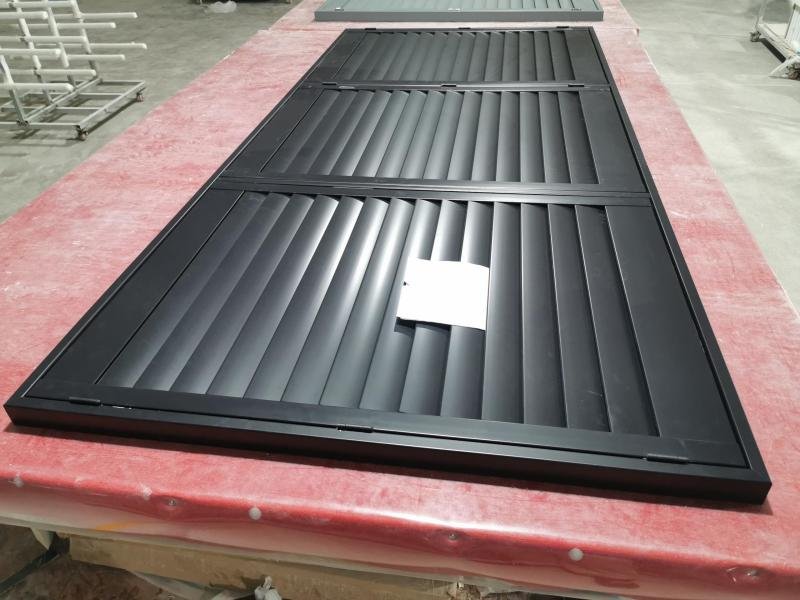
How do we test for it at the source instead of hoping it doesn't happen?
Knowing that a surface reading alone can't catch case hardening changed how we structured incoming inspection. We added cross-sectional moisture testing to our incoming quality control: sample boards are cut in cross-section and tested separately at the surface and at the core, with a required difference of ≤2% between the two readings. A board that passes a surface-only check but shows a wider surface-to-core gap than that gets flagged before it enters the production line — not after it's been shaped, assembled, and packed.
This isn't a replacement for routine moisture meter checks on the floor; it's an additional layer aimed specifically at the failure mode that meters can't see. It sits within the broader six-stage quality control system we run across incoming materials, in-process checks, final inspection, UV yellowing resistance testing, moisture and structural stability testing, and packaging compression testing — the moisture and structural stability stage is where this cross-sectional check lives. The point of adding it isn't that any single check guarantees a defect-free shipment; it's that a defect with a long, invisible incubation period needs to be caught with a method suited to that specific blind spot, not just faster surface scanning.
Even with this testing, are there climates where wood shutters still aren't the right call?
We'd rather tell you this upfront than have you find out after installation: even with careful drying and moisture testing, wood is not immune to humidity over the long term. In environments with average relative humidity above 70% and significant seasonal swings, wooden shutters can develop 0.5–1.5mm of louver warping over a 10-year period — even with protective priming applied. This isn't a manufacturing defect. It's the physical response of a natural material to repeated humidity cycling, and no amount of upstream quality control changes that underlying physics.
For projects in consistently humid, high-swing climates, we typically recommend PVC plantation shutters instead of wood. Our wood shutter range — offered in ash, basswood, pine, and paulownia, including an FSC-certified pine series for buyers with environmental compliance requirements — genuinely performs well in most residential and moderate-humidity commercial settings. But the honest trade-off is real: wood's advantage is aesthetic warmth and texture, and that comes with a long-term maintenance consideration that PVC doesn't carry in the same way. We think that trade-off is something a buyer should weigh with full information, not discover after the fact.
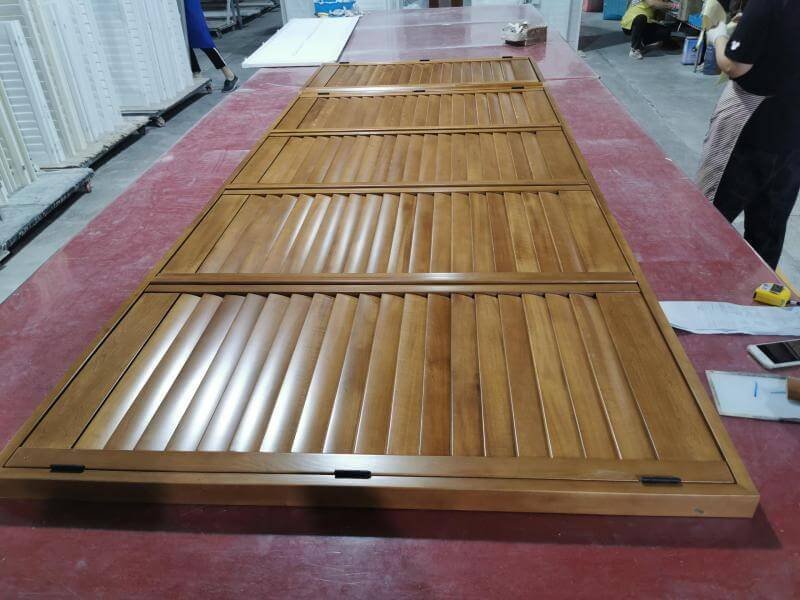
What this means for your sourcing conversation
If you're evaluating a wood shutter supplier, the moisture control questions worth asking go beyond "do you check moisture content." A factory-floor pin meter reading is a reasonable first-line check, but it isn't sufficient evidence against case hardening on its own. Ask specifically whether cross-sectional or oven-dry testing is part of incoming inspection, and what the kiln drying cycle length looks like. These are the details that separate a batch that survives ocean transit from one that doesn't.
Our Plantation Shutters lead time runs 20–30 days from order confirmation, and the moisture control steps described here are part of that production window rather than an add-on step that extends it. If you're sourcing wood shutters for a market with sustained high humidity, we're also happy to talk through whether our PVC series would be a better long-term fit for that specific climate — we'd rather have that conversation before your order ships than after.
Vetting a wood shutter supplier for your next order? Request our QC protocol documentation and wholesale lead time schedule →
FAQ
Q: What is case hardening in wood shutters? A: Case hardening is a wood-drying defect where the outer layer of a board dries and stabilizes while the core retains higher moisture content. It's invisible at the time of production and typically only becomes apparent as warping after the moisture differential equalizes over time — often during or after ocean shipping.
Q: Can a moisture meter detect case hardening? A: A standard pin-type resistance moisture meter generally can't, because it only measures the outer 5–8mm of the wood surface. Case hardening is specifically a surface-versus-core discrepancy, so a surface-only reading can appear compliant while the core is still out of range.
Q: Why do wooden shutters sometimes warp after they arrive from overseas? A: Temperature and humidity changes during container shipping can cause moisture trapped in the core of a case-hardened board to continue migrating outward. As internal stress releases, the board can warp — which is why the defect often isn't visible until weeks after it left the factory.
Q: Are wooden shutters a good choice for humid climates? A: Wood shutters perform well in most residential and moderately humid settings, but in environments with average relative humidity above 70% and significant seasonal swings, some long-term louver warping (roughly 0.5–1.5mm over 10 years) can occur even with proper drying and protective priming. For consistently humid climates, PVC plantation shutters are typically a more stable long-term option.
Q: How is wood moisture content properly verified before shipping? A: The reference method involves oven-drying a sample and comparing surface and core readings directly, per ASTM D4442, which is more reliable for catching surface-core moisture discrepancies than a handheld resistance meter alone.
This ASTM standard covers the recognized procedures for directly measuring moisture content in wood and wood-based materials. ↩