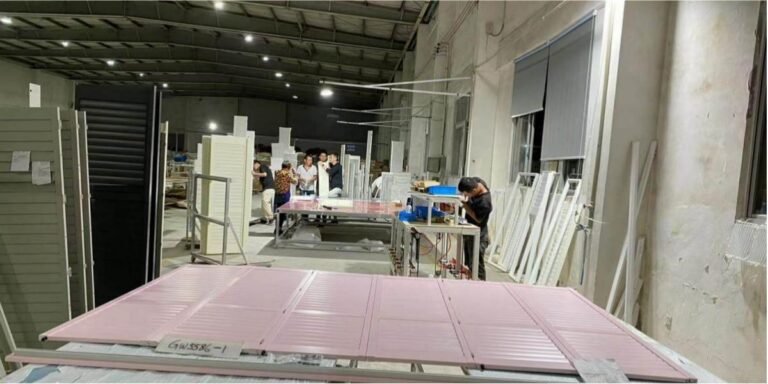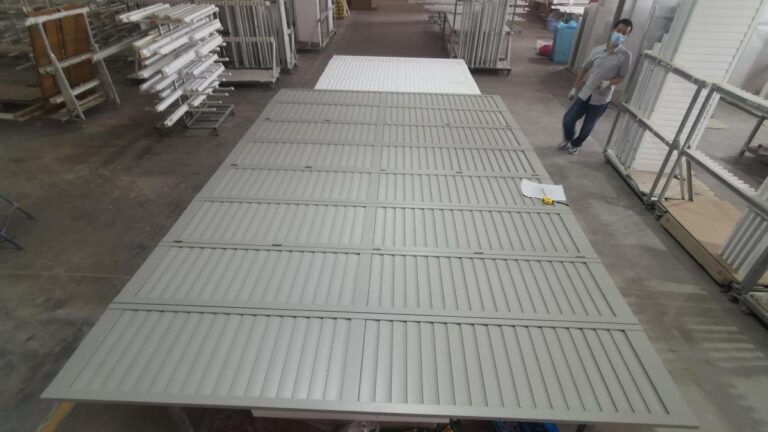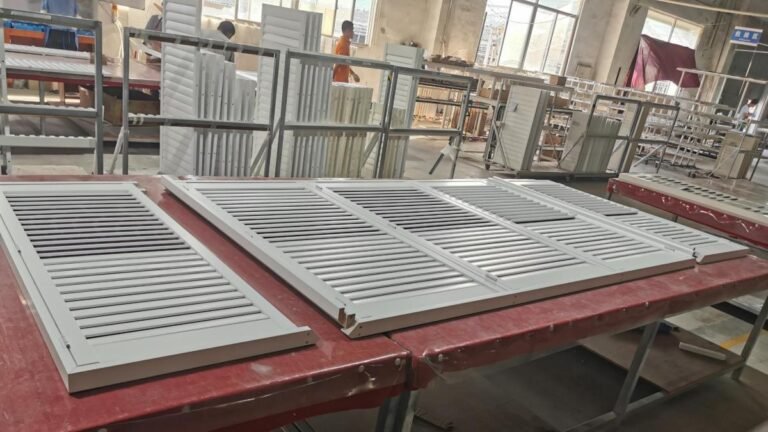


Most factory pages show the same three photos: a warehouse exterior, a row of CNC machines, and a smiling team in matching polos. None of that tells a buyer what the numbers actually mean for their order. We operate from a production base of more than 50,000 square meters in Xiamen, built up since our founding in 2008, and after nearly two decades in this industry, we've learned that buyers don't need more photos — they need to know what the square footage, the headcount, and the equipment list actually buy them in terms of consistency, lead time, and accountability when something goes wrong.
This article walks through what vertical integration means in practice, what our quality control checkpoints actually check for, and — just as importantly — where scale stops solving problems on its own.
What Does "50,000+ Square Meters" Actually Mean for a Wholesale Buyer?
A large facility footprint matters less for its own sake than for what it allows a factory to do in-house rather than outsource. Our 50,000+ square meter base houses raw material processing, PVC extrusion, aluminum profile production, wood shutter assembly, and shade manufacturing under one operational structure, rather than spreading these steps across multiple subcontracted workshops.
For a wholesale buyer, this distinction has a practical consequence: when material processing, component manufacturing, and final assembly happen inside the same operation, there are fewer handoff points where color drift, dimensional inconsistency, or scheduling delays can creep in between one workshop and the next. This is a general characteristic of vertically integrated manufacturing in the window covering industry, not something unique to any single factory — but it's the reason we've built our operation this way rather than relying on outsourced components.
What Happens Inside a Vertically Integrated Shutter Factory, Step by Step?
Vertical integration is a specific production sequence, not a marketing label. It also isn't a single sequence — the path differs by material, and each path exists for a reason tied to how that material behaves.
The PVC path starts with resin and additive compounding, moves through extrusion into shutter profile shapes, then cutting to size, then assembly into finished louvers and frames. Because the profile shape and color are set at the extrusion stage, keeping extrusion in-house means color and dimensional decisions are made once, under one set of process controls, rather than being re-matched across separate cutting and assembly subcontractors.
The aluminum path runs from billet through profile extrusion, then to powder coating, then to cutting and assembly. Coating is the step most sensitive to environment and timing — the interval between extrusion and coating, and the coating line's own temperature and cure-time control, affect long-term adhesion and corrosion resistance. Keeping extrusion and coating under one roof means that interval is controlled rather than left to whatever schedule an outside coating vendor is running that week.
The wood path is the least standardized of the three: raw timber processing, drying, cutting, finger-jointing on longer components, sanding, and finishing. Wood is also the material most sensitive to handling between stages — moisture content can shift during transport or storage between subcontractors in a way it doesn't for PVC or aluminum. Keeping this path in-house limits the number of times partially processed wood components change hands and environments before final assembly.
All three material streams converge at final assembly, where louvers, frames, tilt rods, and hardware are built into finished shutters, blinds, or shades. The reason this matters to a buyer isn't the sequence itself — it's that every stage from resin or billet to finished product stays inside one accountability chain. If a batch shows a color deviation, we can trace it back to a specific extrusion run rather than chasing down which of three outside subcontractors used a different color masterbatch that month. This traceability advantage — fewer handoff points between raw material and finished goods — is a general characteristic of vertically integrated manufacturers in this industry, not a claim unique to any one factory, but it's the operational logic behind why we've structured production this way.
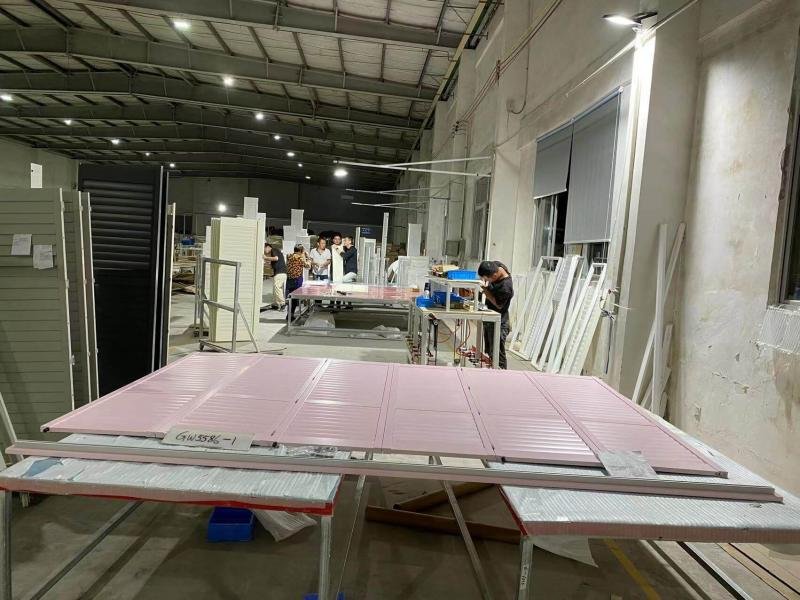
How Many People and Machines Does It Take to Run This at Scale?
Square footage without staffing and equipment is just empty space. The table below is the production infrastructure behind our three product lines.
| Category | Figure |
|---|---|
| Production floor area | 50,000+ m² |
| Staff | 400+ |
| CNC machining centers | 20+ units |
| Automated powder coating lines | 3 lines |
| Automated roller shade cutting & ultrasonic sealing equipment | 15+ sets |
| Cellular shade heat-press forming lines | 6 lines |
| Automated assembly stations | 80+ |
| Plantation Shutters annual capacity | 280,000 sets/year |
| Venetian Blinds annual capacity | 120,000 sets/year |
| Window Shades annual capacity | 80,000 sets/year |
Each of these numbers exists to solve a specific production problem, not just to fill out a spec sheet.
The 20+ CNC machining centers let us hold tight tolerances on components across wood, PVC, and aluminum in parallel, rather than queuing every material type through a single shared, generalized line — which matters when three product lines are running simultaneously and none of them can afford to wait behind the others.
The 3 automated powder coating lines support aluminum shutter and hardware output, where coating thickness and cure consistency directly affect long-term corrosion resistance — particularly relevant for orders headed to coastal or high-humidity markets, where an undercoated batch may look fine on arrival and underperform years later.
The 15+ sets of automated roller shade cutting and ultrasonic sealing equipment address a different problem entirely: fabric-based shades need precise, repeatable cutting and edge sealing at volume, since a shade line running at low automation would create exactly the kind of batch-to-batch sizing inconsistency that shows up as a customer complaint months after installation.
The 6 cellular shade heat-press forming lines exist because honeycomb shade cell geometry is formed under controlled heat and pressure. More lines mean we can hold tighter temperature control per batch rather than running one line flat-out across every order — a point that matters more than it might seem, since heat-press temperature control affects whether a finished honeycomb shade actually performs at its rated insulation level or falls short of it.
The 80+ automated assembly stations are what convert component output from all three material paths into finished, boxed product at the stated annual capacities — 280,000 sets of Plantation Shutters, 120,000 sets of Venetian Blinds, and 80,000 sets of Window Shades per year. These capacity figures aren't a single combined number by design: each product line has its own bottleneck (extrusion for PVC shutters, coating throughput for aluminum, heat-press cycle time for cellular shades), so capacity planning happens per line rather than against one blended total.
What Do the Six Quality Control Checkpoints Actually Check?
A quality control system is only useful if each checkpoint catches something the others don't. We run six distinct quality checkpoints across the production cycle: Incoming Quality Control (IQC) on raw materials, In-Process Quality Control (IPQC) during manufacturing, Final Quality Control (FQC) on finished goods, UV yellowing resistance testing, moisture and structural stability testing, and packaging compression testing.
Each checkpoint targets a different failure mode, and it's worth being specific about what each one is actually looking for.
IQC catches material-level problems before they ever reach a production line — resin that's off-spec, timber with excessive moisture content, or aluminum billet that doesn't meet the required grade. Catching a material problem at this stage is far cheaper than catching it after the material has already been extruded, coated, or assembled into a finished component.
IPQC catches process drift mid-run — for example, an extrusion line gradually moving out of dimensional tolerance over the course of a shift, or a coating line's temperature drifting outside its set range. Without an in-process checkpoint, this kind of drift is often invisible until enough of it has accumulated to show up as a visible defect, by which point an entire run may already be affected.
FQC is the final check on the finished product before it's approved for packing — dimensions, finish, hardware function, and overall appearance against spec.
UV yellowing resistance testing and moisture/structural stability testing address how the product will perform after it leaves the factory, under real-world conditions — sun exposure over months or years, or humidity cycling in transit and in service — rather than just how it looks on the day of inspection. These are the two tests most directly tied to the kind of delayed, hard-to-trace defects that don't show up until a product has already been installed for a year or more.
Packaging compression testing checks whether the product and its packaging will survive the physical stress of a container stack on a multi-week ocean crossing — a factor that has nothing to do with the product's own manufacturing quality, but everything to do with whether it arrives undamaged.
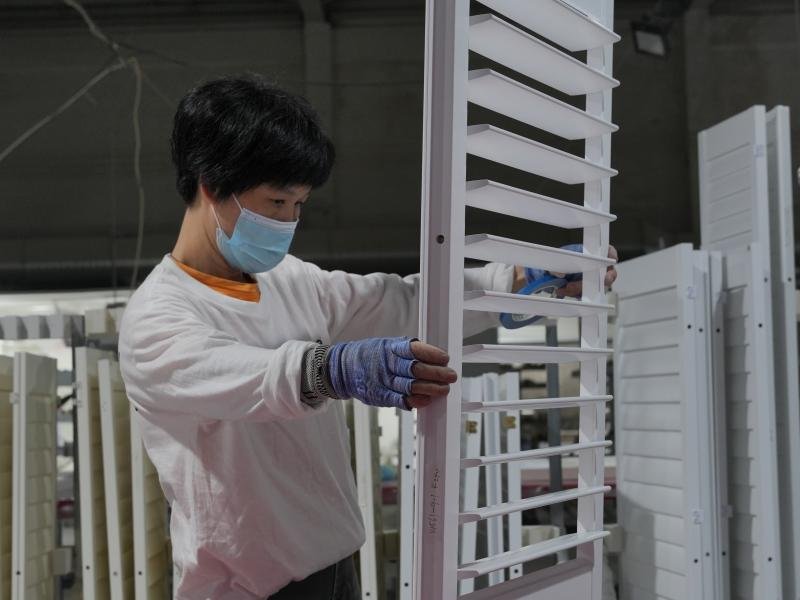
Why Do We Inspect After the Boxes Are Sealed, Not Just Before?
Most factories treat the pre-shipment inspection as a check on the product. We treat it as a check on the packing process too, which is why our standard is to inspect after cartons are sealed and the container is loaded — not only before packing begins.
A final quality check performed only before packing misses damage introduced during the packing process itself — bumps, crushed corners, or improper stacking that happen after the product has already passed FQC. Our internal sequence is: FQC inspection first, then packing, then a 100% carton count with a 10% open-carton spot check after loading, and only then do we issue the final pre-shipment inspection (PSI) report. This is our internal working standard, not an industry-mandated requirement — but it's the sequence we hold to because damage introduced during packing is otherwise invisible until the container is opened on the other side of the ocean, weeks later, when the cost of a claim is far higher than the cost of catching it in-house.
Where Does Vertical Integration Stop Solving Problems?
It would be easy to present vertical integration and in-house QC as a guarantee against every quality issue. That isn't honest, and it isn't how manufacturing actually works. The gap between a sample and a bulk production run is a real and well-known risk in international sourcing, and vertical integration reduces it — it doesn't eliminate it. A sample is typically built with more individual attention than a product coming off a production line at scale, and that gap can show up in bulk orders even from factories with strong in-house capability and rigorous QC checkpoints.
Our approach to this specific risk has three parts. First, we provide a Pre-Production Sample (PPS) rather than only an early development sample, so the reference point for bulk production is closer to what actually gets manufactured on the line — not a hand-finished prototype. Second, our standard contract language ties final specifications to the PPS, with batch tolerances documented alongside it, so there's no ambiguity later about what "matching the sample" actually means. Third, for a buyer's first large order, we schedule an in-process inspection (IPI) once production reaches roughly the halfway point, which gives enough time to correct a drifting parameter before the full batch is complete rather than discovering it only at final inspection.
We recommend buyers write these three elements into their own purchase agreements — not because our factory needs the pressure, but because it turns a quality problem from "discovered after it's too late to fix" into "caught while it's still correctable." A factory that only offers a first-sample approval and a final inspection, with nothing in between, is leaving that entire window of risk unmanaged.
If your project requires documented inspection checkpoints, PPS-based specification agreements, or mid-production inspection scheduling, talk to our project team about your QC requirements.
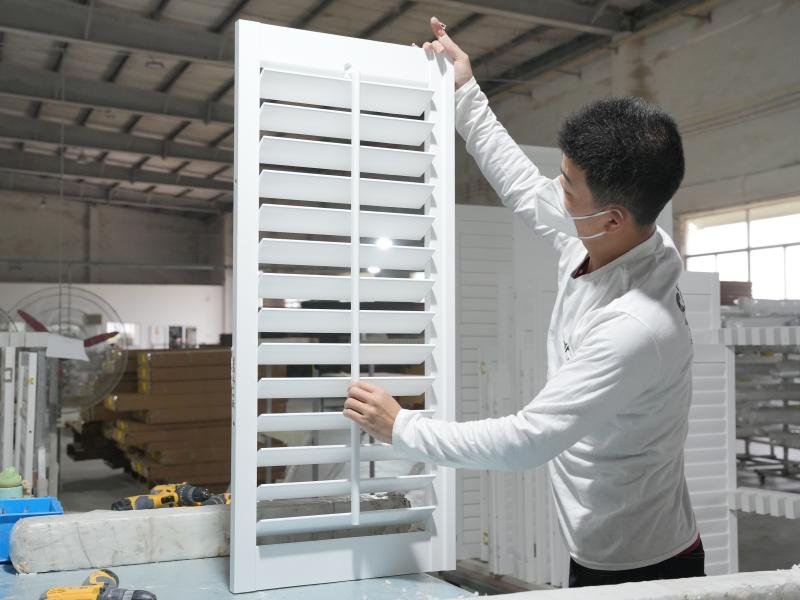
What Should You Verify Before You Book a Factory Visit?
Numbers on a page are easy to publish. The useful test for a buyer isn't whether a factory can state its square footage and staff count — it's whether the factory can walk you through what happens at each stage of production when you ask. Before a visit or a first order, it's worth asking a prospective supplier to explain their extrusion-to-assembly sequence for the specific material you're ordering, what their inspection checkpoints actually test for at each stage, and how they handle the sample-to-bulk transition on a first large order.
These are the same questions this article has just answered for our own operation — which is intentional. A factory that can't answer them in specific, verifiable terms is telling you something about how the rest of the relationship will go. If you're evaluating suppliers for a wholesale program, a component-supply arrangement, or a first project order, the specifics in this article — our production sequence, our QC checkpoints, and how we handle the sample-to-bulk gap — are what we'd expect you to verify in person or ask us to walk through directly.
Evaluating us as a wholesale supplier? Request our wholesale price list and lead time schedule alongside this factory overview.
Frequently Asked Questions
How large is Goodwood Shutters' production facility, and what does it include? Our facility covers more than 50,000 square meters in Xiamen and houses raw material processing, PVC extrusion, aluminum profile production, wood shutter assembly, and shade manufacturing within one operation.
What's the difference between IQC, IPQC, and FQC? IQC (Incoming Quality Control) checks raw materials before production starts. IPQC (In-Process Quality Control) checks for process drift while manufacturing is underway. FQC (Final Quality Control) is the last check on the finished product before it's approved for packing.
What is a pre-shipment inspection (PSI), and when does it happen? Our PSI is conducted after cartons are sealed and the container is loaded, not only before packing. Our sequence is FQC inspection, then packing, then a 100% carton count with a 10% open-carton spot check, followed by the final PSI report.
Does vertical integration guarantee consistent quality between samples and bulk production? No. The gap between a sample and a bulk run is a known risk in international sourcing that vertical integration reduces but doesn't eliminate. We manage it with a Pre-Production Sample (PPS), contract language tying specs to the PPS, and a mid-production in-process inspection (IPI) on first large orders.
How many units can the factory produce per year? Annual capacity is tracked separately by product line: 280,000 sets of Plantation Shutters, 120,000 sets of Venetian Blinds, and 80,000 sets of Window Shades, since each line has its own production bottleneck.