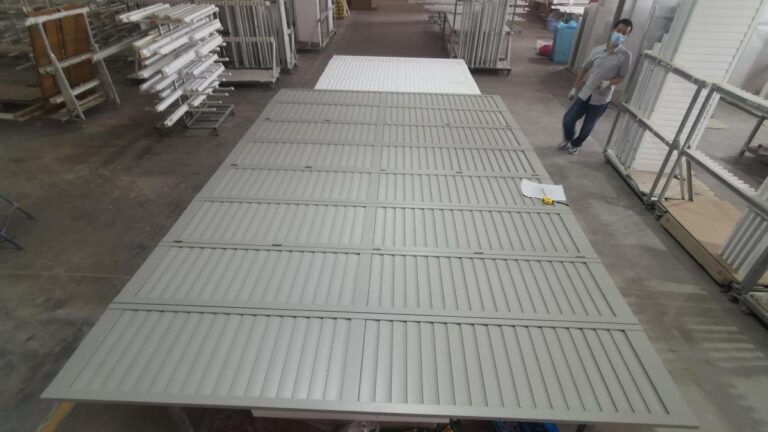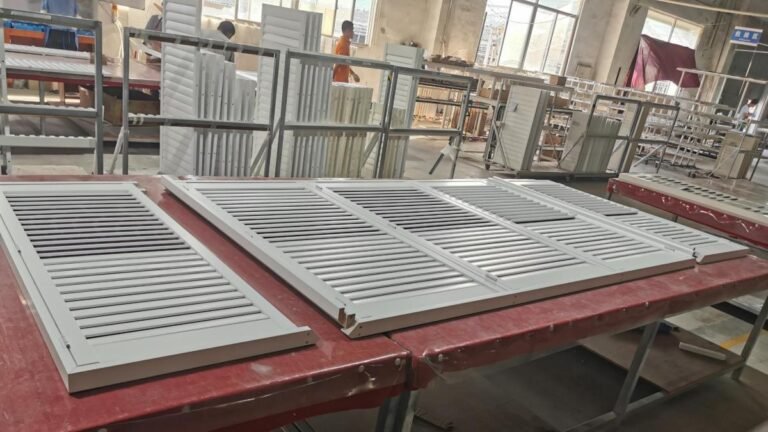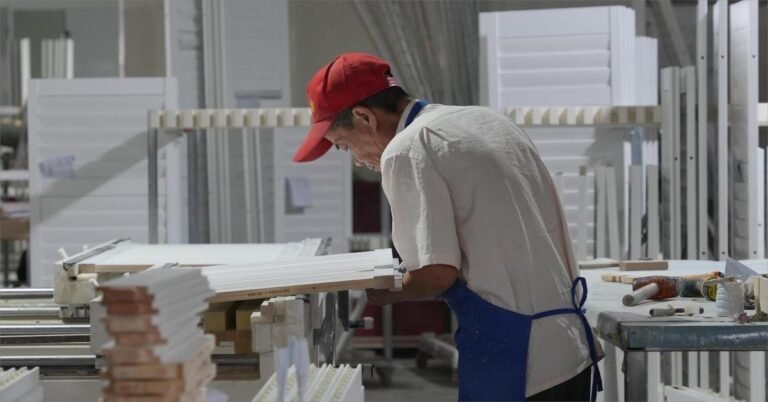

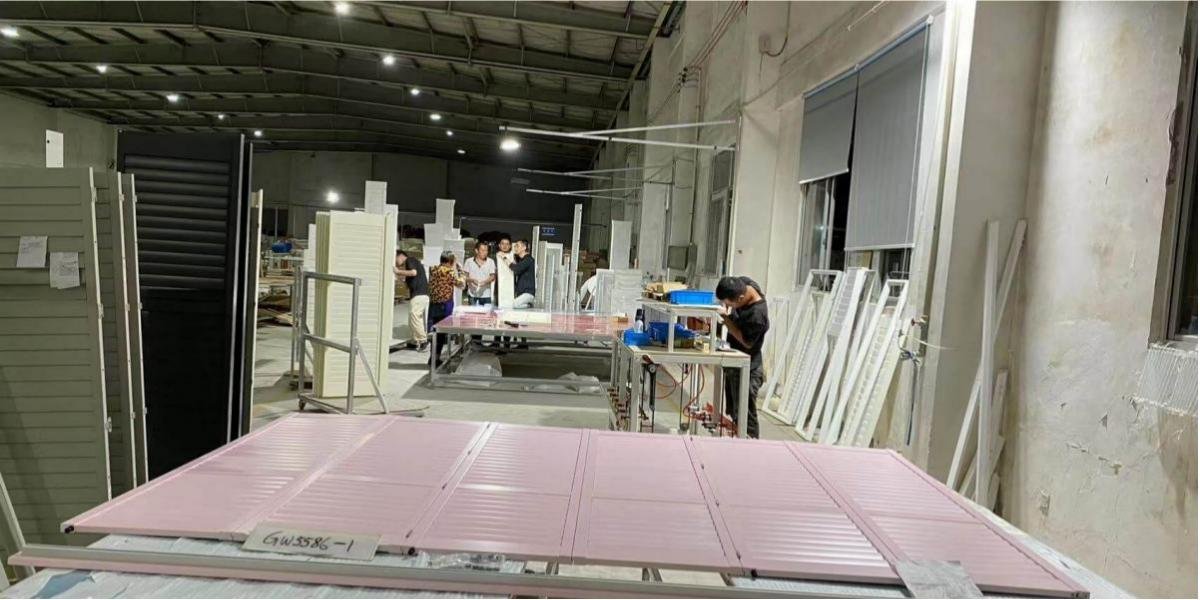
If you are comparing plantation shutters wholesale manufacturers in China, the sample on your desk is the least informative thing you will receive. Goodwood Shutters has been manufacturing in Xiamen since 2008, across a production base of more than 50,000 ㎡ with 400+ staff. In that time we have learned that the sample proves a factory can build one good shutter. It does not prove the factory can build the next 2,000 identically.
A good sample does not guarantee a good production run, so three things should be locked in before production starts: a pre-production sample (PPS) that becomes the contractual reference, a standard light source for colour approval, and an inspection that happens after goods are packed, not just before. The rest of this guide explains why each matters and how to verify it yourself, whether you are evaluating us or anyone else offering factory direct plantation shutters.
Why does a good sample not guarantee a good production run?
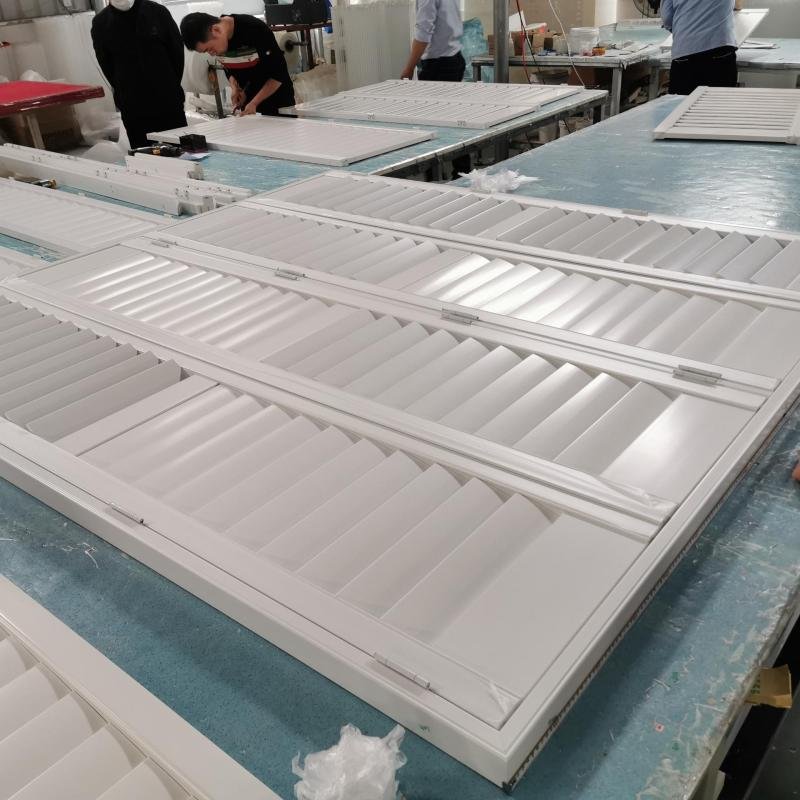
A sample is built carefully, often by experienced staff, with attention a production line cannot give every unit. Mass production runs on a line, with different operators, different material lots and time pressure. The gap between the two is called quality drift. It can be prevented, but it never disappears on its own.
Many disappointing first orders do not come from dishonest factories. They come from a buyer approving a development sample and then discovering that "approved" was never defined in a form that applies to 600 sets arriving in a container.
We will be direct about the limits here. No factory, including ours, can promise zero drift between a sample and a bulk order. What a factory can do is change when drift is discovered. Our approach is to move it from "found after the container is at your warehouse, when nothing can be fixed" to "found while production is still running, when correction is possible." That is a process commitment, not a guarantee of perfection, and it is the standard we suggest you hold any supplier to.
A factory that answers "our quality is very stable" without describing a mechanism is not answering your question.
What three clauses should a wholesaler lock into the contract before production starts?
Lock in three things: a PPS (pre-production sample) as the approved reference, a clause stating that product specification follows the PPS with a tolerance table attached to the contract, and an in-factory inspection at 50% completion on your first large order. Together they turn a vague promise into something you can enforce.
These are the measures we recommend, and the ones we run on our side:
- Ask for a PPS, not just the development sample. A development sample shows what the factory can make. A PPS is made with production materials and production processes, shortly before the bulk run, so it shows what the factory will make.
- Write "specification follows PPS" into the contract, with a batch tolerance table attached. Without a stated tolerance, every minor variation becomes an argument about interpretation.
- Arrange an in-factory inspection (IPI) when roughly 50% of the order is complete. At that point enough units exist to see a pattern, and enough time remains to correct it.
| Measure | When it happens | Risk it addresses |
|---|---|---|
| Pre-production sample (PPS) | Before bulk production begins | Approving a development sample that does not reflect production materials and processes |
| Spec follows PPS + tolerance table in contract | At contract signing | Disputes over what "matches the sample" means |
| In-factory inspection (IPI) at ~50% completion | Mid-production, first large order | Drift discovered only after goods ship |
Together, these three measures turn quality drift from something you find after delivery into something you can catch while it is still fixable. If a supplier resists all three, that tells you something about how they expect bulk production to compare with their samples.
For a first order, the schedule matters too. Our Plantation Shutters lead time is 20–30 days, and sampling takes 3–7 days. That is long enough for a mid-production inspection to be practical, so plan the visit or the third-party inspector booking when you agree the production schedule, not after it starts.
How do you prevent colour disputes before the container ships?
Agree on one standard light source for approval. Colour disputes often start because two parties judge the same product under different light. Under 4000K cool-white factory lighting a sample can look identical to the standard, then show a visible difference under D65 (6500K)1 daylight. The effect is strongest on whites and off-whites.
White and off-white are the dominant colours in plantation shutters, and they are the colours most sensitive to lighting.
Many factory floors use cool-white fluorescent lighting around 4000K. A sample that matches the reference under that light can show a colour difference (ΔE)2 of 2.5–3.0 under D65 daylight, which the human eye can detect. If the factory approves colour on its floor and your team approves it in a daylight-lit warehouse or showroom, both sides can honestly believe they are right.
Our colour approval room uses a D65 standard light box (6500K, colour rendering index Ra > 90), and we compare every colour against the standard colour panel there. This is our own internal practice, not an industry mandate.
| Light source | Colour temperature | Effect on white / off-white approval |
|---|---|---|
| Typical factory floor lighting | ~4000K | Samples can appear matched when they are not |
| D65 standard light box | 6500K, Ra > 90 | Reveals differences visible in natural daylight |
Two practical suggestions for wholesalers:
- Ask the factory which light source it uses for colour approval. If the answer is "the workshop lights," ask them to re-check the reference under D65.
- Use the same standard in your own receiving inspection. If you approve under D65 and then judge delivered goods under warehouse LEDs, you recreate the dispute you were trying to prevent.
Which factory-side checks separate a manufacturer from an assembler?
Ask what the factory controls itself and how often it measures it. Process-level checks, such as in-line wall-thickness measurement, material verification by testing rather than declaration, and inspection after packing, show whether quality is managed during production or only inspected at the end.
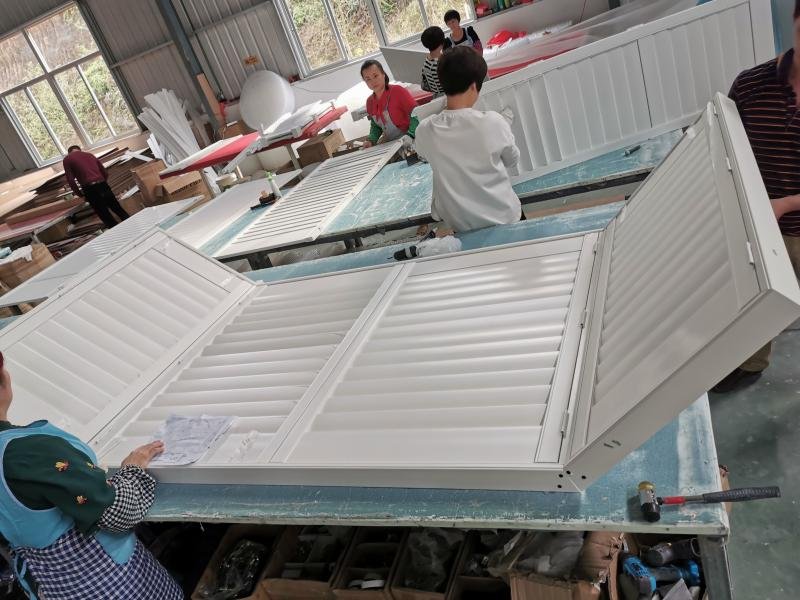
Goodwood's vertical structure includes in-house PVC extrusion, with 50+ extrusion lines and 200+ profile sections. Controlling extrusion ourselves is why we can apply checks like those below. A factory buying profiles from outside can only inspect them on arrival. Four checks are worth asking about.
Wall-thickness tolerance, and how often it is measured. Suppose a profile is designed with a ±0.1mm wall tolerance, but production drifts to ±0.3mm. The shutters pass visual and dimensional checks at the factory. After shipping and a season or two of temperature cycling, the deviation accumulates and shows up as light leaking through closed louvers, typically 12–18 months after delivery, long after your warranty conversations have moved on. Our standard is to check wall thickness on the extrusion line every 30 minutes, whereas every 4 hours is common elsewhere. This is our internal control standard, not an industry requirement.
Material verification by test, not by statement. We require suppliers to provide a TGA (thermogravimetric analysis)3 report for each batch to confirm what is actually in the compound, rather than relying on a formulation claim. Ask any factory whether its additive levels are verified by report or only declared.
Inspection timing. If a factory only inspects finished goods before packing (FQC), it misses damage created during packing: knocks, crushing, poor stacking. Our sequence is FQC, then packing, then a 10% opened-carton check after 100% of the goods are packed, and only then the final pre-shipment inspection (PSI) report. If you hire a third-party inspector, specify the same timing, after full packing and before the container is sealed.
Damage responsibility. The limit we always tell buyers about is that surface scratches or dents on PVC shutter panels have no acceptable on-site repair. Touch-up paint will not match the original coating's colour or gloss. We therefore pack each panel individually, and we suggest your contract state clearly who is responsible for damage at each handover point: ex-works, arrival at port, and installation.
These checks sit within Goodwood's six-part quality system: incoming material inspection (IQC), in-process inspection (IPQC), final inspection (FQC), UV yellowing resistance testing, moisture and structural stability testing, and packaging compression testing. A system like that is only useful if you can see how it applies to your order, which is why the questions above matter more than the list itself. For the scale behind these controls, see inside our vertically integrated factory.
What does a step-by-step checklist for vetting factory direct plantation shutters look like?
Seven steps: define "approved" in writing, require a PPS, attach tolerances to the contract, agree one colour light source, schedule a mid-production inspection, specify post-packing inspection timing, and define damage responsibility by handover point. Each is something you can verify before you pay a production deposit.
- Define what "approved" means. Get the approved sample's specification, colour reference and tolerances in writing, not only a photograph.
- Require a PPS made with production materials, and approve against it rather than the development sample.
- Attach a batch tolerance table to the contract and state that specification follows the PPS.
- Agree the colour approval light source (D65, 6500K) with both sides, and use it in your own receiving check.
- Schedule an in-factory inspection at about 50% completion on your first large order, personally or through a third party.
- Specify inspection timing: after 100% packing, before container sealing. Ask what proportion of cartons will be opened.
- Write damage responsibility into the contract for each handover point (ex-works, arrival at port, installation), and confirm how panels are packed.
None of these steps requires a factory visit, although a visit helps. They require a supplier willing to be specific, and that willingness is often the most reliable early signal.
Ready to test a supplier against this checklist?
If you are a wholesaler or distributor evaluating a new source, we are happy to be measured against the seven steps above. Request our wholesale price list & lead time schedule and we will send current pricing and lead times by product line, together with the PPS and tolerance-table process we would apply to your first order. You can also contact our team to discuss territory protection and how a mixed-container first order could be planned.
Frequently Asked Questions
Why does a plantation shutters bulk order sometimes look different from the approved sample?
A sample is built with extra attention, while bulk production runs on a line with varying operators and material lots. This gap is called quality drift. It can be reduced by using a pre-production sample (PPS), a tolerance table in the contract, and a mid-production inspection, but no factory can promise it is zero.
What is a PPS and why should wholesalers ask for one?
A PPS (pre-production sample) is a sample made with production materials and processes shortly before the bulk run. Unlike a development sample, it shows what the factory will actually produce, so it works as the contractual reference for approving the order.
What light should be used to approve shutter colours?
Use one agreed standard, such as a D65 (6500K) light box with a colour rendering index above 90. White and off-white samples that match under 4000K factory lighting can show a ΔE of 2.5–3.0 under D65, which the human eye can detect.
When should a pre-shipment inspection happen?
After 100% of the goods are packed and before the container is sealed. Inspecting finished goods only before packing misses damage caused during packing, such as knocks, crushing and poor stacking.
What is the lead time for plantation shutters from a factory in China?
At Goodwood Shutters, Plantation Shutters lead time is 20–30 days, with sampling in 3–7 days. Lead times differ by product line, so confirm the schedule for each product you plan to order.